Tuesday, 17 January 2017

My Equine and Business Management Journey- Part 2

Holly here! This is my second instalment in to my Equine journey. During my Equine Studies and Business Management course at Writtle I was able to choose whether to study Stud or Equitation. I chose Equitation and toughly enjoyed it. We were taught about the theory of riding then at Writtle I had the opportunity to work as part of a team to further develop one of the horses and on a separate occasion, develop a rider.


Whilst the training of the rider, we created lesson plans for our fellow class mates and over a few weeks worked together to develop the position and communication with the horse. We were then assessed on our ability to teach the rider a lesson. Although this was very nerve racking, it helped me to develop my communication skills, which I was probably somewhat lacking.


Working as a team to develop a horse was probably my favourite part of the module. Over a five week period our group of four worked together to improve our horses. Our horse was called Silver, she was very sweet when on the ground but had a tendency to rush at fences and needed to develop her lateral flexion. Lateral flexion is the bending of a horses body to the left and right, for instance when working on a circle, we wanted Silvers body to follow the shape of the circle. Some weeks we struggled to improve Silver, however by the end of our five week period we were able to jump a course of small fences with a greater amount of control and flexion.


Holly Morley

Third Year Equine Studies and Business Management Student

Monday, 16 January 2017

My Equine and Business Management Journey

My name is Holly Morley, I’m a student studying at Writtle University College in my third year of my Degree in Equine Studies and Business Management. I love all animals and completed an Extended Diploma in Animal Management before I began at Writtle. I have had a passion for horses since a child and wanted to continue to learn about them whilst studying a subject that could be applied to other industries.


Studying a degree in Equine Studies and Business Management has enabled me to learn about horses as well as some business aspects. Both equine and business modules have been covered during my time at Writtle. A few of the module include Equine Nutrition, Equitation and Coaching, Business Skills and Applied Business.

The Equine Nutrition module has enabled me to learn about the nutritional requirements of the horse and how they vary according to age, workload and digestive requirements. It was extremely fascinating and eye opening learning about how the horse’s digestives system tackles the different food types provided to them. For this module there were both, theory and practical aspects. The theory included lectures and each week a different nutrient was covered, information about which feeds provide the nutrient, how they are digested and what excess or lack of the nutrient can do to the horse was covered. The information was provided by a lecturer that was not only knowledgeable but passionate about the subject covered. One practical during this module included an inspection of a horse’s digestive system, it was amazing to actually see the scale of the horse’s digestive system and the different fazes of food digestion.

One key business module undertaken has been Business Skills. Although it may sound boring, during this module, the key skills required for business and employment were covered, making it relevant and stimulating. Guest speakers came to talk about how they opened their own business and what they did after graduating from Writtle. It was interesting gaining a perspective on how different people have progressed, from there courses. One of the visitors was the owner of Equine Careers; she spoke about starting her online business. Not only did this visitor meeting opportunity provide knowledge of professional job opportunities when I graduate, it also provided information on how to start a successful business.
Holly Morley
Third Year Equine Studies and Business Management Student

Wednesday, 21 December 2016

What next? How careers support can help


With assignments in and a couple of weeks to catch up with family and friends, now could also be a good time to give your future career some thoughts too.  Amongst the mince pies, wrapping paper and new year festivities, it’s a good chance to actually ponder the future too.  Why?  Because with all the familiarity around you, thinking about the ‘what if’s?’ and ‘how about?’ can be done without rushing or undue anxiety.  Of course, this process doesn’t have to be done on your own, without outside help.  The careers advisory service (CAS)is here to help you explore all the options, and to help you decide what is best. Hopefully the following will help you to focus your thoughts and show you how we can help too.


Planning ahead will help you graduate!
What are you good at? What skills have you developed, even a little? What motivates you? Conversely, what causes you the most angst on your course or work wise?  The difficult things may not be ones to avoid, tempting as it may be.  For instance, if presenting to others is something that does not come naturally, actually improving this skill will enhance your career prospects no end!  How can CAS help?  We can talk all these through with you, to help you identify what you are good at, what motivates you, things to develop etc.  In essence to find the golden thread from your previous experience, current situation and possible future ‘professional selves’.   

Identifying possible opportunities that match your skills, experience and motivation will be an important part of the jigsaw. Where are the opportunities geographically, how many are there, are you a good ‘fit’ or are there still ‘gaps’ to work on to ensure you have a good chance in securing an opportunity?  And just as importantly, how could these opportunities develop your golden thread of skills, motivation and experience for future opportunities? The careers advisory service can help you identify sources of opportunities, reflect on how well you meet the requirements, and how to address any gaps you have identified.  Critical friend role?  Absolutely!

So, having undertaken an audit on your own skills, motivation and interests, combined with identifying possible options you now need to consider how to successfully get the opportunity,
Snakes and ladders2.JPG
Wiki images source Druysts.t
whether it’s a job or place on a Masters or PhD.  Presenting a ‘professional self’ can be tricky, especially if you have not had much time in the world of work yet.  But it is definitely possible, even if it feels difficult.  We can help you with a CV, LinkedIn profile and mock interviews, and help you reflect on what you have learnt already from any employer contact you have had in the past.

So, in conclusion, the festive season will hopefully bring you many things, including time with family and friends, relief that assignments are done and maybe even some presents!  It can also give you a chance to step back and start to ponder the future. It is important to start this before ‘the future’ arrives, with the end of your course!  And hopefully, having read this far you know that there is help available to put all of this thinking into practise.

Monday, 17 October 2016

Graduate employment opportunties and careers fairs!

Now that term has well and truly started, it is time for final year Higher Education students to start thinking about life after dissertations and exams.  And not just to ‘think’ about it, but take some action too. Why? 
 
  • It's graduate careers fair season
  • Employers graduate schemes are open (and some will close soon) for applications
  • Masters/PhD’s are available to apply for from now


So what do you need to do?

Firstly, you need to keep a regular check on graduate scheme deadlines. There are several coming up between now and Christmas. Some of these sites will allow you to register for vacancy alerts and give you more information - target jobs vacancies listings, target jobs graduate schemes, graduate scheme deadlines, prospects and gradjobs.
 
Once you start filling in the applications (usually online), don't forget to save copies of what you have put, as you will find the answers useful for other applications too.

 
Secondly, if you are thinking about continuing with further study though an MSc or PhD, you can start applying for these now. Some Masters will be more popular that others and will fill up more quickly, others in more specialist areas or at less competitive prestigious universities will accept applications for much longer. If you are keen to get funding for further studies e.g. a PhD or a PhD that comes with a salary (otherwise known as a stipend), then you need to be researching for these opportunities now. These opportunities can come up at any time of the year, but you do not have to wait for them to be advertised. You can make contact with university departments from now, especially if you have a research proposal in mind. You can use  https://www.findaphd.com/ and www.findamasters.com for more information about this.

 
Careers and postgraduate fairs are also worth attending.  Mainly because they will give you a chance to talk to lots of employers or universities offering postgraduate courses in one hit. That way you can intensively research the opportunities that could be possible and feel that you’ve made good progress in a day!  One tip, research the companies attending the fairs before you arrive, so you know what they do and who they are, and so you can prepare questions to ask them. The Writtle University Careers Fair is on Wednesday 9th November, 12pm - 3pm.  For more details please speak to Mark Yates, Careers Adviser, located on the first floor in the Library. 
 
Lastly, don’t forget that if the options sound too numerous, or you are not sure what you actually want to do, talking to a careers adviser will help clarify the situation. So get talking!!

 
Written by Mark Yates.

Wednesday, 7 September 2016

Starting a new course or returning to university?

Term is just about to start, after a long summer.  Are you feeling prepared for what’s coming next?  This blog will look at some top tips for coping with starting or a new course, or returning for another year.

Snakes and ladders2.JPG
Wiki images source Druysts.t
 Be prepared!  You will hopefully know what is expected of you.  But there may be some surprises too. 
Plan! There will be a lot to take in during the first 2 weeks, friends to make or catch up with, timetables to get used to, names of students and lecturers to try and remember.  And this doesn’t just for 1st years either!  Although most 2nd and 3rd years should remember where their classrooms are.  So, its worth spending a few minutes at the end of each day reflecting on what’s happened that day, or what might happen the next day, and jotting any thoughts or notes down.  This way you can make a note of anything you need to find out about – and reduce any anxieties the uncertainty might cause.  In a few weeks, it will be worth taking a longer term view on this forward planning to see what will be expected of you for assignments/reading etc.

Find out something new each day!  In your first few days there will be an element of information overload, some of which you might forget.  But once you get past this stage, its worth trying to stretch your knowledge more, even if its just exploring the college estate for 20 minutes.

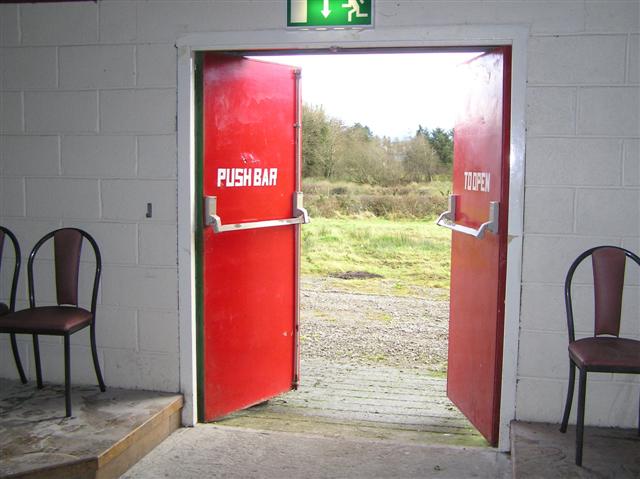
Emergency Exit, Ballroom of Romance, Glenfarne - geograph.org.uk - 1089901.jpg
Wiki Images source Kenneth Allen
Start planning your exit!  This isn’t about ensuring you are not the last to leave the party.  But about what’s going to happen after your course has finished.  This might sound strange at the start of your course, or only in the early few weeks of year 2/3.  But the time will pass very quickly, and employers are increasingly engaging with students far earlier in their studies than a few years ago.  Want that internship or volunteering opportunity this summer?  Or that graduate scheme?  Now’s the time to start planning it.


Using social media – good, bad, ugly?  There used to be a divide between the online world and real life, but not anymore, as you know.  Regardless of the rights or wrongs of the situation, employers do look at your social media profile, photos, likes, comments and activities at some point during the recruitment process.  And not just for jobs like accountancy, MI5, teaching or Defence against the Dark Arts lecturers.  People have been turned down for science labs interviews for ‘liking’ an anti animal testing comment when they were a lot younger.  Seriously!  So, before doing some applications, do some ‘tidying’ up of your social media presence.  Social media can be a very useful way of engaging with employers too.  If you want to talk about how to do this, contact the careers department.

Enjoy it! One of the most important things to do on your course!!  Learning should be enjoyable and interesting.

Tuesday, 23 August 2016

Got your GCSE results? What next?


So, its exam results season.  And just when the sun has arrived, and there is still plenty of sport to participate in or watch!  This blog will look at your options, and what to do next!
CAMPUS 07.jpg
Writtle University College
    Firstly, regardless of what your results are this week, well done on having got through your GCSE years.  There will have been highs and lows, friendships made and experiences to remember. With the ‘raising of the participation age’ a few years ago, you'll be continuing your learning one way or another, through 6th form, college or an apprenticeship - and with better qualifications meaning more money, who wouldn’t want to carry on learning?
If you get the results you expected, or better and now want to change your ideas about what to do next, or if you don’t know what to do, its not too late!  There are a few things you’ll need to do to get everything organised. 
- Talking your ideas through at home with your family/carers
They know you well and might have some ideas.  Just remember that qualifications and options might have changed a bit since other family members did them, so its worth getting information that’s as up to date as possible as well.  
- Talk to the careers adviser at school, your local college or at the National Careers Service about what your options. 
File:Wikt speech bubble scroll.png
Image sourced from Wikimedia
Author: Diego
There are always some students who do not do as well as expected.  This can happen for a variety of reasons.  The first reaction might be to panic, and assume that its ‘life over’.  It is definitely not the end of the world, even if it feels like it!  Understanding why this has happened will be the first step.  There will be a range of college courses, apprenticeships and traineeships that will help you ‘catch up’ to where you had expected to be. 
This could be a very good chance to take a moment and reconsider what you want to do next.  Don’t forget it may have been 6-8 months ago you applied to 6th form or college, in which time actually your thinking about future courses and careers could have changed.
So, what practically do you need to do if you didn’t get the grades or have changed your ideas about your future?
Talk to your family
Talk to the careers adviser at school
Talk to the careers adviser at college

Contact the National Careers Service staff about your options
Find out about vacancies on local courses you might be interested in (a college admissions team, training provider or 6th form office will know what their vacancies are!)
Check the difference between courses, e.g. a sport science course will be different to sport studies
Talking to your school careers adviser, or a careers adviser at a local college will be a very good idea. They will be able to talk all the options, and won’t push you towards one option, they will help you decide what’s best for you, even if its applying to another institution.
Keep an open mind about how to get to the ‘end destination’ of your career.  For most industries there will be several routes and entry points into them.  Over the next 40 years, your ‘career’ is likely to take several unexpected twists and turns, so taking some advice now will help your career path off to a good start.


After all, your career is likely to look more like a game of snakes and ladders than in the past.  So taking some advice from family, school staff and careers advisers will all help!
Snakes and ladders1.JPG
Image sourced from Wikimedia Author: Druysts.t


Thursday, 11 August 2016

Is this the end or a new beginning?

File:Wikt speech bubble scroll.png
Image sourced from Wikimedia
Author: Diego
Now that the end of term has gone, with exams finished and coursework handed in, you’ve finally reached the finish line!  And with the Olympics happening, there will be plenty of time to enjoy watching them.
 
But it's not quite ‘all over’ yet. It will really help you if you view the next few weeks as a new beginning too. The reasons why are as follows. Firstly, it would be good to spend time reflecting on what you have found interesting, challenging or dull this year and why. The reason? By reflecting on the knowledge gained this year you can decide if or how you could use it in a potential career. Does the thought of using what you’ve learnt about equine nutrition, landscape design or commercial horticulture excite you?  What does this tell you about your career aspirations?  Do you need to talk this through with your tutor or Careers Adviser? 

Secondly, it is not just about the knowledge that you have learnt.  It’s useful to reflect how your skills have developed this year.  This is equally as important as reflecting on your knowledge.  Employers and universities want to see that you can identify and apply the skills you’ve gained to a new situation, e.g. a job or a postgraduate course.  Not only is it important to show others you can do this, but it is crucial for you too.  Why?  Because you need to be able to compare what you have to offer to what an employer or university are asking for.  If you can’t demonstrate that you are a good match, an employer or course scheme manager won’t do this for you.  So part of this ‘looking back’ is about applying this to developing your career/study plans for the future.


Planning ahead will help you graduate!
Are you wondering about whether to use the knowledge and skills you’re gaining or if there’s a ‘better something’ out there?  Within each degree area there will be a variety of related and unrelated careers or further study you could go into.  About 80% of graduate jobs don’t require a specific degree subject, so you could apply for any number of interesting graduate schemes or jobs.  Roughly 10% of graduates will get onto a graduate scheme, often these schemes do not want a specific subject.  There are a huge number of SME (small and medium enterprises) who are very keen to take on students who have developed graduate level skills, in a variety of career ideas.  Just being a graduate itself will give you plenty of skills and experience which will be appreciated by employers if you can present them well enough.

Image sourced from Wikimedia
Author: Petey21
So, the end of this academic year is here, and the beginning of the future is just around the corner!  Is this true for everyone?  If you are finishing your degree course, the answer will be an obvious yes.  But if you are in your first or second year, it is also worth viewing this summer as a new beginning too.  Doing an audit will help you identify what opportunities might be worth targeting to develop your skills or test out your newly acquired knowledge over the next academic year.
 
Your career is going to last a very long time, and it can take time to find the ‘perfect’ career or vacancy - this won’t always happen straight after university.  Did you know you can use the College careers service for up to 3 years after finishing your course?  Careers support is often about helping students audit themselves, to develop their own career management skills.  And you can use the service forever if you are an employer looking to fill a vacancy in the future!  So, whatever year you are in, now is a good time to celebrate the end and start to plan for the beginning.

Written by Mark Yates, Careers Coordinator