Tuesday, 16 June 2015

Writtle Wildlife Watch, June 2015

One of the joys of being a lecturer on the Conservation scheme here at Writtle is that you get to visit some wonderful places. And this year we took our first and second year students away for a week to the glorious area of the south coast, the New Forest. 
 
Maiden Castle, Dorchester
During what the Two Ronnies might have called ‘a packed programme’, (goodness, that makes me feel positively antediluvian!) we went all over Hampshire, Dorset and Wiltshire, visiting some great sites and talking to people working in a huge variety of Conservation jobs. 
 
For me though, the mini-highlight was on the Thursday when we stopped off to have a look at Maiden Castle, a magnificent Iron Age hillfort just south of Dorchester. Always impressive and giving beautiful views over the surrounding countryside, it is a particularly good spot for finding various birds such as Linnet, Skylark and Corn Bunting. And I thought that was all we were going to find but on the way down, student Jimmy suddenly stopped and said ‘Alan, what’s this funny beetle?’. 
 
Oil Beetle at Maiden Castle
Now, many species of insect are special but then there are others which really have the ‘wow’ factor. And Jimmy had found one of the latter – an Oil Beetle. 
 
Oil Beetles are peculiar and charming in equal measure. They are rather odd to look at, with an elongated body and narrow head, but have an exquisitely glossy sheen of black, violet and blue. They are totally reliant on solitary bees for the completion of their lifecycle, with the beetle larvae climbing flower-stems and waiting in flowers in order to hitch a ride on a passing bee. Back in the bee’s nest the larvae of the beetle feeds on its eggs, as well as the stores of nectar and pollen before emerging as an adult. 
 
We have lost three of our species in recent years and now only five are left. They favour flower-rich grasslands of the type found at Maiden Castle but sadly, we have lost many of these sites in recent decades, making an encounter with an Oil Beetle even more special.
 
Yes, we did see a Corn Bunting as we left but somehow it wasn’t the best wildlife sighting that day.
 
 
Written by Alan Roscoe

Monday, 15 June 2015

What it's like being a Horticultural student at Writtle...

Samuel Moore tells us what first interested him in Horticulture, and how he pursued his passion for plants by studying Horticulture at Writtle College. During his time at the College, Samuel, along with his classmates, has achieved many prestigious awards including 'Best in Show' at the Ideal Home Show earlier this year. But you'll see from Samuel's blog below, their success didn't end there! 
 
The only way in which my horticultural education experience can be best be described is 'magical'.
I first became interested in learning about plants and gardens when I was around about 15; this cumulated in myself studying an ICS Diploma in Garden Planning and Development and this allowed me to progress into studying at Writtle College.
I was offered a place on the Level 1 in Horticulture, but just a few days into the course the experienced and supportive staff at Writtle felt that I was capable to undertake my studies at level 2.  I learnt many practical skills and the theory behind their practise which enabled me to progress on to the level 3 Extended Diploma in Horticulture.
Samuel (right) and classmates at the Ideal Home Show
My time at Writtle College has enabled me to take advantage of a some fantastic experiences that all of the horticultural departments have made possible.  From designing and building a show garden at the prestigious Ideal Home Exhibition, to representing Writtle at the National Final IOH 'Young Horticulturalist of the Year'.   
Entering ‘Young Horticulturalist of The Year’ has left me feeling proud of my efforts and it has capped off a great academic year after achieving Gold, ‘Best in Show’ and ‘People’s Choice Award’ with the rest of my classmates for our show garden ‘Beyond the Wood’ at the Ideal Home Show.
I entered the IOH competition last minute and I would never had imagined reaching the final. The heat at Writtle was tense with two tie-breaks needed to separate a winner… something that was unheard of!
The regional final was nerve racking but good experience. The competition included plant and 'pest and disease' identification and buzzer rounds, along with directed questions. I managed to win the regional final which I never would of expected! 
The national final was exactly the same format as the regional final, and it was held at Barrington Court in Somerset. Again, I was nervous and the competition was of a very high calibre. The other competitors were very knowledgeable and my nerves left me too slow on the buzzer, which proved to me finishing 7th in the competition.
Ben Wincott (right) and students
I would recommend studying horticulture at Writtle College to anyone, as every aspect of the course is amazing. The opportunities and knowledge I have had access to has given me the confidence to continue my studies at Writtle on the Bsc (Hons) in Landscape and Garden Design.
Without Writtle, I wouldn’t have experienced the wonderful world of horticulture and the range of opportunities that are available through it. I particularly feel that the lecturers are of a high quality and that they put their students first, particularly Ben Wincott who absolutely inspires me with his knowledge and his attitude towards education, horticulture and his students.
 
Written by Samuel Moore

Monday, 30 March 2015

Build Week, Results and Elation!

So the build week was here, and for me it started at 7am, in a lorry, travelling up to London Olympia to unload the components for our show garden. It was to be a long and stressful week. Tensions ran high which was not helped by the hustle and bustle of the convention environment, and having to move all of our equipment multiple times, but as a team we worked through it.

Stress was alleviated in the evenings by calm group meals, and it was good to socialise with each other, leaving the stresses of the day behind us and preparing for the next working day.
The finished piece.
The plan was to be finished by the Wednesday, but we had not finished everything we wanted to, so a good percentage of us travelled back up to London to finish the garden. That evening, knowing what we had accomplished, it felt amazing and the excitement for the results was could be felt among the group.

Friday was the big day, our gardens were going to be open to the public and would be judged. Lecturer Ben Wincott, and student Sam Moore were initially interviewed for ITV, and we all eventually featured on the news item. An important role was bestowed upon Rob Band and Francesca Le Maistre Banham, they were chosen to pitch to the judges. Many of us would have been over the moon to have this opportunity, but we felt as a group, these two conveyed the passion and idea coherently and would be strong ambassadors of Writtle College. When they were speaking, the judges looked so invested in what they were saying, and this spread positivity through the group.

The winning team with their prizes.
Once this was completed it was time to wait.  We were all very proud of the garden we had created, but what we were awarded with blew our minds! Not only were we one of two gardens to get Gold , but we also got the coveted Best in Show award. All the hard work and the long hours had paid off, and we had done what we wanted to achieve.


I can personally say that I have so much pride for all of the group We stepped up our game and created a very ‘sexy’ looking garden, as said by Alan Titchmarsh. Receiving a compliment like ‘this garden should be at Chelsea’ is an accolade we did not expect. The support by the media and on social media has been incredible and has given all a hint on what we can actually achieve.
 
The Ideal Home Show has been an experience that will stay with me forever. Something that not many courses offer, which makes studying Horticulture unique. And with continued support like we have had this year, the gardens should just get better and better each year.
 
A massive thank you to all the sponsors, Ideal Home Show and definitely to Ben Wincott and Simon Watkins for their support.

Listen to what Alan Titchmarsh has to say about the award here: https://www.facebook.com/video.php?v=10152868772603473

Written by Joshua Kemp
 

Equine Sports Therapy students give Pie a well needed massage!

We all like a good massage from time to time, and as it turns out, so does our latest resident – Pie, a young male horse that recently joined the college from World Horse Welfare. But what are the benefits of massaging a horse, and how did it all come about? Equine Sports Therapy student Catriona Wilshere has the answers...
 
On the 25th February new arrival Pie received a soft tissue massage from 3rd year Equine Sports Therapy students. Many of the Equine Sports Therapy students are currently studying for their Equinology Equine Bodyworker certificate, and the Writtle College horses are subsequently treated to frequent massages.  
 
Before the soft tissue massage was performed a static and dynamic assessment of Pie was undertaken in order to asses Pie’s conformation, as well as to allow any areas of muscle atrophy and hypertrophy and regions of muscle tension to be noted. Pie was extremely well-behaved throughout the assessment, allowing all aspects of the assessment (which included picking all his hooves to check his balance, examining the symmetry of the pelvic tuberosities and checking his rounding reflex) to be performed with ease. During the static assessment some areas of tension were located within his neck and gluteal muscles and slight wear was noted on the medial aspect of his right fore, suggesting he lands more heavily on this side of his hoof when moving.

Image courtesy of Laura Sullivan
Following the static assessment Pie was assessed dynamically.  Again, it was evident from both the walk and the trot that Pie possessed some areas of muscle tension within his body. Due to the muscle tension observed during both the static and dynamic assessment, it was decided that a soft tissue massage would prove to be both a beneficial and enjoyable experience for Pie.

Following the dynamic assessment Pie was returned to his stall in order for the massage to be performed.  Although at first he was distracted by trying to steal his fellow horse’s hay from underneath the stall walls, Pie quickly relaxed into the massage, showing a particular liking for the firm slow strokes of the glide, as well as thoroughly enjoying the work performed on his rhomboids, deltoids and ascending pectorals. Despite his young age, Pie proved to be a delight to work on, willingly performing all stretches and quick to demonstrate a preference for a particular stretch or movement, or to relax when an area of tension was released.

All too soon for Pie, the massage was complete. The areas where tension had been found previously were rechecked and the muscle tension was found to have significantly reduced, with Pie showing almost no tactile response in previously sensitive areas. Some follow up exercises were suggested and owing to his excellent behaviour and clear enjoyment of the process, no doubt Pie will become a firm favourite amongst therapy students looking to practise their massage skills.
 
Written by Catriona Wilshere, 3rd year BSc (Hons) Equine Sports Therapy student.

Tuesday, 17 March 2015

Young Gardeners of the Year 2015!

Check out the latest news from our Horticulture students hoping to win gold again in the Young Gardeners of the Year 2015 competition!

This week involved lots of tweaking to the already existing features. This was frustrating for some of the group as it looked like progress was slow. However, this is necessary to create a high quality product.

The design starts to take shape.
Our water feature came back from the metal workers, which will be a key feature within the garden. Also, our generously donated brand new porcelain paving imported from Italy arrived from Global Stone and will look slick against the black of the millboard.
 
Building the water feature.
Easy-Connect have provided lights for us. This will allow us to highlight specific areas of our garden, as well as casting shadow which will add a new element. 
Time is rapidly leaving us and pressure is increasing, however, excitement within the group is also increasing. It is already amazing to see an idea come to life and to know that I have had an input in that process. I personally cannot wait to see the end product at the show!

Written by Joshua Kemp

Friday, 13 February 2015

New horses arrive at Lordships Stud!

Alaska and Revel (aka ‘Pie’) joined the Lordships Stud, Writtle College, on 21st January 2015 from World Horse Welfare. The staff and students were all very excited about the two new arrivals, as Alaska and Pie would both be bringing something new to the college stud unit from all aspects.  

"Pie" Image courtesy of Lordships Stud
These two young horses have joined Writtle College to be used in practical sessions with the students, as well as hopefully being able to go through the Young Stock backing programme in September 2015.  Once they arrived they were both placed in isolation for one week; this was to allow them to get used to their new environment, as well as to prevent any possible pathogens being passed to the other young horses on site. After their week of isolation, both Alaska and Pie were slowly introduced to the rest of the yard, and settled in to their new routine with both the staff and students.  

Since their arrival, they have both been involved in a number of practical sessions with the students; both at college and degree level. For example weighing, measuring and body condition scoring for the first year students and structural development for the third year students.  As they become more familiar with their new environment, they will become involved in more taught sessions with a variety of student groups. 

Both horses have taken to their new surroundings well and appear to be very accepting of the students.  Students have commented on how good Alaska and Pie are to handle when conducting practical sessions, as well as when being turned out and brought in from the fields.  Other comments from staff and students are that even though they both have had a rough start in life, they are both very trusting with people; which is clearly due to the couple of years spent at World Horse Welfare Hall Farm and the work of the amazing team of staff there. From a behavioural aspect, it has been noted that Alaska is the more dominant of the two, but still very sweet natured.  

"Alaska" Image courtesy of Lordships Stud
Following this interaction with World Horse Welfare, students have expressed an interest in visiting World Horse Welfare for either work experience or an educational tour. The students would like to see first-hand how the staff at World Horse Welfare treat and handle their horses to enable them to become so trusting and well behaved despite their difficult start in life. As Alaska and Pie both went into World Horse Welfare being unhandled, it is clear that they have both made significant progress to date, and here at Lordships Stud, it is proposed that their education will be developed further, and hopefully increase their chances of finding a permanent home!

Written by Natasha Coughtrey Smith 2nd year BSc Equine Studies and Business Management

Friday, 16 January 2015

Writtle Wildlife Watch!


The face of the Essex countryside is forever adapting, with the arrival of new animal and plant species on a frequent basis. Farming is essentially changing too, with less livestock production and more arable crop farming. So why are we seeing these changes happen?

Conservation expert, Alan Roscoe, explores why...

"I was chuffed the other day to see that celebrity chef Tom Kerridge’s pub, the Hand and Flowers, serves a main course of ‘Essex lamb bun with sweetbreads and salsa verde’. With the notable exceptions of Kelly bronze turkeys, samphire from our estuaries and previously, saffron from the eponymous Walden, Essex is not especially venerated for the distinctiveness of its produce. So it was nice to see us given a mention.

Aker i Skane Sverige (2).jpg
Image courtesy of Wikipedia "Crops"
by Johannes Jansson
It got me thinking though, about how geographically polarised our food production has become, with comparatively little livestock in the south-east, and how this has affected our wildlife. A lamb from Essex is a pretty rare - no pun intended - beast and I can think of only two farmers locally who raise sheep for the table. The exception proves the rule therefore. Essex is predominantly an arable county and has been for many years, mostly as a consequence of its soil being excellent for crops.

The presence of animals on a farm was, many decades ago, a given. They were there to provide the power to drive the plough and the harrow. With the arrival of mechanised power in the early 20th century however, the presence of animals on a farm was no longer necessary and finding working animals on an Essex farm is now almost an impossibility.

So what is the knock-on effect?
Farmer plowing in Fahrenwalde, Mecklenburg-Vorpommern, Germany.jpg
Image courtesy of Wikipedia "Farmer ploughing"
by Ralf Roletschek

Well, for a start, you no longer need grassland to feed your animals. And so called ‘unimproved’ grassland i.e. areas which have not had applications of chemicals or ever been ploughed, are especially rare. These areas have high conservation value and would have numbered among the fields which had fed animals for hundreds of years, only to be turned over to the plough once the animals were no longer needed.


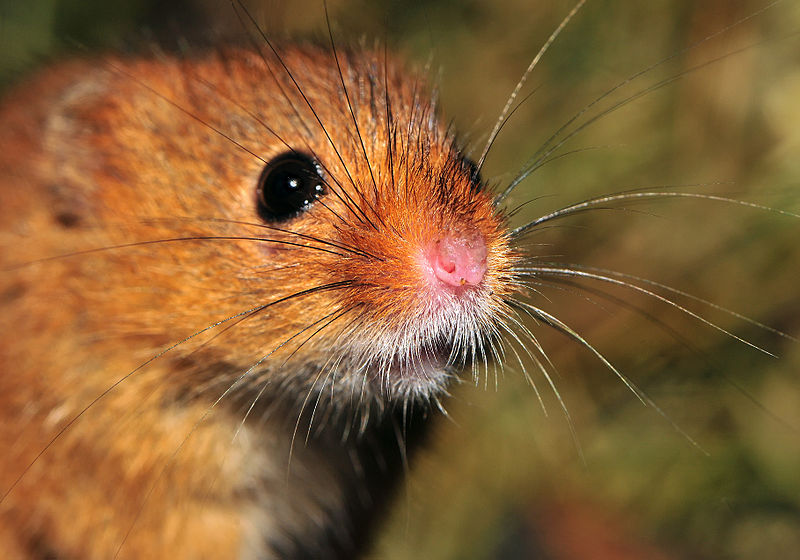
File:Harvest Mouse (face).jpg
Image courtesy of Wikipedia
"Harvest mouse" by Michael Gäbler
But we also lose the animals and, arguably, their most important product – their waste. An ecosystem is built from the base up and, in many systems, we are talking about insects. Animal waste provides food and shelter, primarily for various families of flies and beetles. These insects then become a food source for small mammals, amphibians, reptiles and birds, thus acting as the base of    a huge ‘food pyramid’.


So although Tom’s lamb bun will set you back £27 a time, you are doing your bit for biodiversity in Essex!"