Showing posts with label environment. Show all posts

Monday, 30 March 2015

Build Week, Results and Elation!

So the build week was here, and for me it started at 7am, in a lorry, travelling up to London Olympia to unload the components for our show garden. It was to be a long and stressful week. Tensions ran high which was not helped by the hustle and bustle of the convention environment, and having to move all of our equipment multiple times, but as a team we worked through it.

Stress was alleviated in the evenings by calm group meals, and it was good to socialise with each other, leaving the stresses of the day behind us and preparing for the next working day.
The finished piece.
The plan was to be finished by the Wednesday, but we had not finished everything we wanted to, so a good percentage of us travelled back up to London to finish the garden. That evening, knowing what we had accomplished, it felt amazing and the excitement for the results was could be felt among the group.

Friday was the big day, our gardens were going to be open to the public and would be judged. Lecturer Ben Wincott, and student Sam Moore were initially interviewed for ITV, and we all eventually featured on the news item. An important role was bestowed upon Rob Band and Francesca Le Maistre Banham, they were chosen to pitch to the judges. Many of us would have been over the moon to have this opportunity, but we felt as a group, these two conveyed the passion and idea coherently and would be strong ambassadors of Writtle College. When they were speaking, the judges looked so invested in what they were saying, and this spread positivity through the group.

The winning team with their prizes.
Once this was completed it was time to wait.  We were all very proud of the garden we had created, but what we were awarded with blew our minds! Not only were we one of two gardens to get Gold , but we also got the coveted Best in Show award. All the hard work and the long hours had paid off, and we had done what we wanted to achieve.


I can personally say that I have so much pride for all of the group We stepped up our game and created a very ‘sexy’ looking garden, as said by Alan Titchmarsh. Receiving a compliment like ‘this garden should be at Chelsea’ is an accolade we did not expect. The support by the media and on social media has been incredible and has given all a hint on what we can actually achieve.
 
The Ideal Home Show has been an experience that will stay with me forever. Something that not many courses offer, which makes studying Horticulture unique. And with continued support like we have had this year, the gardens should just get better and better each year.
 
A massive thank you to all the sponsors, Ideal Home Show and definitely to Ben Wincott and Simon Watkins for their support.

Listen to what Alan Titchmarsh has to say about the award here: https://www.facebook.com/video.php?v=10152868772603473

Written by Joshua Kemp
 

Friday, 13 February 2015

New horses arrive at Lordships Stud!

Alaska and Revel (aka ‘Pie’) joined the Lordships Stud, Writtle College, on 21st January 2015 from World Horse Welfare. The staff and students were all very excited about the two new arrivals, as Alaska and Pie would both be bringing something new to the college stud unit from all aspects.  

"Pie" Image courtesy of Lordships Stud
These two young horses have joined Writtle College to be used in practical sessions with the students, as well as hopefully being able to go through the Young Stock backing programme in September 2015.  Once they arrived they were both placed in isolation for one week; this was to allow them to get used to their new environment, as well as to prevent any possible pathogens being passed to the other young horses on site. After their week of isolation, both Alaska and Pie were slowly introduced to the rest of the yard, and settled in to their new routine with both the staff and students.  

Since their arrival, they have both been involved in a number of practical sessions with the students; both at college and degree level. For example weighing, measuring and body condition scoring for the first year students and structural development for the third year students.  As they become more familiar with their new environment, they will become involved in more taught sessions with a variety of student groups. 

Both horses have taken to their new surroundings well and appear to be very accepting of the students.  Students have commented on how good Alaska and Pie are to handle when conducting practical sessions, as well as when being turned out and brought in from the fields.  Other comments from staff and students are that even though they both have had a rough start in life, they are both very trusting with people; which is clearly due to the couple of years spent at World Horse Welfare Hall Farm and the work of the amazing team of staff there. From a behavioural aspect, it has been noted that Alaska is the more dominant of the two, but still very sweet natured.  

"Alaska" Image courtesy of Lordships Stud
Following this interaction with World Horse Welfare, students have expressed an interest in visiting World Horse Welfare for either work experience or an educational tour. The students would like to see first-hand how the staff at World Horse Welfare treat and handle their horses to enable them to become so trusting and well behaved despite their difficult start in life. As Alaska and Pie both went into World Horse Welfare being unhandled, it is clear that they have both made significant progress to date, and here at Lordships Stud, it is proposed that their education will be developed further, and hopefully increase their chances of finding a permanent home!

Written by Natasha Coughtrey Smith 2nd year BSc Equine Studies and Business Management

Friday, 16 January 2015

Writtle Wildlife Watch!


The face of the Essex countryside is forever adapting, with the arrival of new animal and plant species on a frequent basis. Farming is essentially changing too, with less livestock production and more arable crop farming. So why are we seeing these changes happen?

Conservation expert, Alan Roscoe, explores why...

"I was chuffed the other day to see that celebrity chef Tom Kerridge’s pub, the Hand and Flowers, serves a main course of ‘Essex lamb bun with sweetbreads and salsa verde’. With the notable exceptions of Kelly bronze turkeys, samphire from our estuaries and previously, saffron from the eponymous Walden, Essex is not especially venerated for the distinctiveness of its produce. So it was nice to see us given a mention.

Aker i Skane Sverige (2).jpg
Image courtesy of Wikipedia "Crops"
by Johannes Jansson
It got me thinking though, about how geographically polarised our food production has become, with comparatively little livestock in the south-east, and how this has affected our wildlife. A lamb from Essex is a pretty rare - no pun intended - beast and I can think of only two farmers locally who raise sheep for the table. The exception proves the rule therefore. Essex is predominantly an arable county and has been for many years, mostly as a consequence of its soil being excellent for crops.

The presence of animals on a farm was, many decades ago, a given. They were there to provide the power to drive the plough and the harrow. With the arrival of mechanised power in the early 20th century however, the presence of animals on a farm was no longer necessary and finding working animals on an Essex farm is now almost an impossibility.

So what is the knock-on effect?
Farmer plowing in Fahrenwalde, Mecklenburg-Vorpommern, Germany.jpg
Image courtesy of Wikipedia "Farmer ploughing"
by Ralf Roletschek

Well, for a start, you no longer need grassland to feed your animals. And so called ‘unimproved’ grassland i.e. areas which have not had applications of chemicals or ever been ploughed, are especially rare. These areas have high conservation value and would have numbered among the fields which had fed animals for hundreds of years, only to be turned over to the plough once the animals were no longer needed.


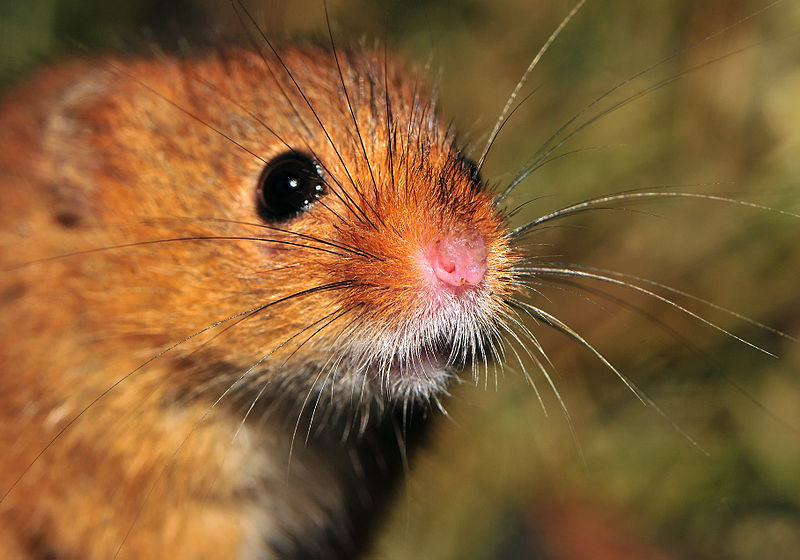
File:Harvest Mouse (face).jpg
Image courtesy of Wikipedia
"Harvest mouse" by Michael Gäbler
But we also lose the animals and, arguably, their most important product – their waste. An ecosystem is built from the base up and, in many systems, we are talking about insects. Animal waste provides food and shelter, primarily for various families of flies and beetles. These insects then become a food source for small mammals, amphibians, reptiles and birds, thus acting as the base of    a huge ‘food pyramid’.


So although Tom’s lamb bun will set you back £27 a time, you are doing your bit for biodiversity in Essex!"

Thursday, 4 December 2014

The challenge of the sea...


This entry comes from the fantastic Writtle conservation team and looks at how the sea impacts on the environment.
------------------------------------------------------------------------------------------------------------------

Winter is here and wouldn’t it be nice to jet off somewhere exotic and faraway? The Maldives perhaps? Or perhaps not…..it seems that particular island group is under imminent threat from rising sea levels. To be precise, the water around the islands is currently rising at 9mm a year and the islanders may have to leave their homes before the year 2100. 

But sea level rise is affecting us here in Britain as well, although clearly not in such a drastic manner. Have a look at a map of the Essex coast and the contour lines show how very close to sea level many of us live. With slowly rising sea levels and the prospect of increasingly unpredictable weather patterns, we have been forced to reconsider how we manage these threats, especially on the east coast of England. 

Image courtesy of federico stevanin at FreeDigitalPhotos.net 
The attraction of ‘hard’ defences, such as sea walls, has lost some of its appeal, not least because of the huge capital cost associated with constructing and maintaining such defences. So what to do? Over the past 20 years Essex has been at the leading edge of a new approach called ‘managed realignment’. This is a process whereby land which is currently protected by sea walls is returned to the sea by knocking through the walls and letting the water in. This way, the effects of any sea level rise or storm surges can be softened by allowing the water more room to spread out, thus reducing the overall impact, especially further up estuaries where waterways narrow.

The best known realignment sites in Essex are at Tollesbury, Abbotts Hall south of Colchester and now Wallasea Island. The sheer scale of these projects is hugely impressive in itself but this type of management is not always popular due to the loss of land which has previously been farmed. And indeed  those who oppose realignment often refer to it as ‘managed retreat’.

But one habitat which seems almost certain to benefit is that great Essex speciality, saltmarsh. In recent decades our saltmarshes have become squeezed between the sea and the sea walls. But by ‘relaxing’ the entire system of management and allowing the water in, we have begun to create new saltmarsh behind the sea walls where none has existed for (in some cases) several hundred years. We are perhaps, simply returning to the sea what was only ever borrowed.

For more information on our degree-level conservation courses, please visit our website: http://writtle.ac.uk/UG-Conservation-and-Environment

Tuesday, 2 December 2014

Young Gardeners of the Year 2015 blog - December 2015


Each year, Further Education Horticulture students from six of the UK's leading horticulture college's participate in the renowned Young Gardeners of the Year (YGOY) competition in London. This event provides a platform for aspiring young horticulture students to showcase their skills and knowledge in areas such as garden design, planting and landscaping. 

The YGOY team discussing designs
Writtle College students will be keeping a blog in the build up to the event in March 2015 to share their experiences of being part of such a popular show and demonstrate the amount of hard work that goes into creating a potential award winning garden.

First off, Josh Kemp informs us of the launch event and the excitement surrounding the 'ideas phase'!

"One of the main features of the year, and an event I have personally been looking forward to, is the Ideal Home Show Young Gardener of the Year Award. It was kicked off this year at the Ideal Home Christmas show at Earls Court with a presentation hosted by David Domoney. The competitor in me could not help but size up the competition. The other colleges are equally capable, but I am positive that Writtle can achieve big things this year.

Josh, left, sharing ideas on a Pinterest board
Since the opening presentation, among the Writtle students taking part, the energy surrounding the award has been almost tangible. It is infectious; to be in such a creative and dynamic environment again is extremely refreshing and inspiring. I set up a Pinterest Board so that any ideas can be visually linked between all the other students, helping us to come up with a collective design incorporating input from everyone. Having completed a design module last year, the team and I have been able to give informed ideas and much discussion has taken place giving me full belief in the ability and commitment of everyone involved. I am beyond excited to continue this process and see what we can achieve in the coming weeks and months. Who knows, the next great British designer could be among us…"

For more information on the launch, click here. 


Thursday, 30 October 2014

Balancing the need for new homes with wildlife protection (October 2014)


This entry comes from the fantastic Writtle conservation team and looks at modern issues surrounding wildlife and the demand for new homes.

------------------------------------------------------------------------------------------------------------------

Conservation is a hugely diverse and interesting subject and Essex has recently been at the forefront of one of the most discussed initiatives of recent years.

People are familiar with the approach to conservation taken by organisations such as the RSPB who are probably best known for nature reserves, which are specially managed, often for rare species.


But that does not mean that even the land immediately adjacent to your own home might not have wildlife interest, for example, reptiles, butterflies and unusual plants. Consideration of the wildlife on any site has been an integral part of the planning process for many years and has come to the forefront as we face the needs to build new houses. 


The Government has been keen to get the economy moving and meet the demand for more houses and, consequently, has been piloting a concept known as 'biodiversity offsetting'. This is a method whereby damage to or loss of wildlife habitat is 'offset' by creating habitat elsewhere as part of the planning agreement. Essex, arguably one of the most biodiverse areas in the UK, has been one of six areas piloting the process.

On the face of it, offsetting seems like a pragmatic solution to a problem which is felt especially keenly in counties such as ours and its supporters claim it offers the benefits of larger and 'better' sites for nature. But the idea has run into some hostility from those in the conservation community and it has been suggested that offsetting cannot work for a number of reasons, among them the fact that natural communities of plants and animals are complex and take time to develop. 

The main issue for everyone is how to balance one set of values against another. For example, last year a huge housing development in Kent was rejected (although planning application submitted by the developer remains in place) due to the extraordinary number of Nightingales found on the site. Was this a "good" decision or a "bad" one? The problem seems to be that we want everything - we demand housing but we also want our wildlife protected. 

So before you think that conservation is something which happens only on a nature reserve, remember that one of the most heated wildlife arguments for many years is currently being acted out right on our doorstep.

Make sure you follow the Writtle conservation team on Twitter: @WrittleCons
Visit our website: http://writtle.ac.uk/UG-Conservation-and-Environment

Friday, 15 August 2014

Writtle Wildlife Watch (July 2014)

Welcome back to the latest Writtle Wildlife Watch! We hope you have all been enjoying your summer. Conservation expert, Alan Roscoe, writes about the latest wildlife he has spotted on campus.

------------------------------------------------------------------------------------------------------------------

Have you ever noticed that when you see an animal or bird for the very first time, you then begin to see it almost regularly, despite the fact you have never encountered it before? Isn’t that strange? And before anyone else jumps in, I am claiming this phenomenon as ‘Roscoe’s Rule’.

Stoat image: Wikipedia "Mustela erminea upright"
by Steve Hillebrand, USFWS
Rather curiously, this appears to be happening on the College’s main campus area with two species in particular suddenly popping up everywhere. Grass Snake is definitely moving into areas it has not been seen before and the impressive size of the females makes for some exciting sightings for students around the campus gardens.

But the real crowd pleaser has been Stoat which, over the past year or so, has also been plucking up courage and moving further onto the main campus. I have certainly seen more Rabbit recently and my suspicion is that the Stoats are simply following their prey. In fact the latest sighting was last week when a colleague heard a Rabbit squealing in a distressed manner at the sight of Stoat (well you would, wouldn’t you?) although he tells me the result was Rabbit 1 Stoat 0. 

Relatively speaking, Stoat has what is known as a wide ‘ecological amplitude’. In other words, it displays an ability to adapt to a wide range of environmental conditions. For this reason, it is found throughout Britain although an individual animal will not usually survive beyond its second year. And a curious anomaly: Stoats are legally protected in Ireland but not in the UK.

Please also follow us on Twitter @WrittleCons.

Tuesday, 17 June 2014

Writtle Wildlife Watch (May 2014)

Writtle Wildlife Watch is back! Once more, our conservation expert Alan Roscoe has been keeping an eye on the wildlife on campus. 

--------------------------------------------------------------------------------------------------------------

"Personally, I am not a great one for cute and fluffy animals. Giant Panda? Thanks but no. Meerkats? Raincheck. Ring-tailed Lemur? Sorry, washing my hair.

But every once in a while you have a close encounter with the cute and fluffy side of nature that really hits home. Back in the January blog I mentioned our various bird boxes around the estate and I am delighted to report we have a newly hatched clutch of College Kestrels this month, having only installed the box earlier this year.

Kestrel box at Writtle College. Copyright Steve Baines.
Under the supervision of local bird box supremo Steve Baines, the box was checked a few days ago and we have five very healthy looking chicks. As you can see they are quite chunky already but also a little apprehensive of strangers! We checked but the mother was nowhere to be seen. You have to be patient as absences from a nestbox can be as long as two hours.

And in line with this blog’s mission to be both entertaining and informative, Kestrels number some 45,000 pairs in Britain, although they have declined recently leading to ‘amber’ status. The word ‘falcon’ derives from the Latin falcis meaning a sickle, and refers to the shape of a falcon’s talons. Now there’s a good word I never learned in my Latin lessons."

For those of you on Twitter, did you know you can now follow us? Find us @WrittleCons.

Tuesday, 29 April 2014

Writtle Wildlife Watch (April 2014)

Writtle conservation expert, Alan Roscoe, has once again been observing the wildlife on campus at Writtle. Here, Alan reviews his April findings.

--------------------------------------------------------------------------------------------------------------

"Now come on, this just isn’t playing fair. One second you think the rain has gone and we are in for another scorching summer like last year, the next you are gazing out of the window, whilst reaching for the thermostat.

But did you notice the slightest warming of the days a few weeks back when things started waking up? We certainly did here at the College as we are interested in annual changes in seasonal events (’phenological indicators’) and our students keep an eye open for us on the first appearance of certain key species, especially butterflies.

Orange Tip, College estate, April 2014, Copyright Noah Greaves
So, what was the first butterfly out of the blocks this year? The Brimstone was the first species, spotted in late February by our student Fiona basking on bricks near the student restaurant (the butterfly that is, not Fiona). This sulphur yellow insect was closely followed by Peacock, Small Tortoiseshell and Comma. But for me the acme of spring is the Orange Tip. This small butterfly says that spring is in full swing and its appearance is all the more special for it being so fleeting.


Thanks to our student Noah for this great picture of a female Orange Tip on the College estate. Roll on summer."

Monday, 31 March 2014

Writtle Wildlife Watch (March 2014)

This month our conservation expert Alan Roscoe discusses the recent installation of an Otter Holt by Writtle students as well as his own encounter with the species.

-------------------------------------------------------------------------------------------------------------------

All animals are fascinating but, let’s face it, we tend to have softer spots for certain species. Of course it helps if it is a mammal – we can empathise with that group – and if you can add in a dash of success against the odds you can end up with a very charismatic species. One such animal is the Otter which has fought back from catastrophic losses in the middle of the 20th century and is now found in every county in England. 

Otter (Image by Catherine Trigg. Source: Flickr)
Students found spraints on the College estate in 2010 and they have also been reported along the River Wid in nearby Writtle village by our friends in the village wildlife group. The otters continue to spraint under one of our bridges and this year we thought we would lend them a hand.

We have regular work parties on the estate and a good project for a pleasant spring day is building an otter holt. Otters will use artificial holts if sited in undisturbed areas and, despite the fact we have a very busy estate, animals can still find quiet corners away from farm and student activity.

I invited students to run the activity as projects like this provide an opportunity to demonstrate planning, resourcing, organisational and management skills. Will and Katy volunteered to look after everything and off we went. The day passed surprisingly quickly and after just three hours we had a very substantial holt (see picture below). I am hoping we can set up our remote camera soon to capture any activity. 

Writtle students with Otter Holt
An added bonus: the timber we used had been brought down by our students elsewhere on the estate as part of felling practice so we also had a perfectly sustainable activity.

Just a footnote: Otters may look cute and cuddly but they are actually very chunky animals. Apologies for ending on a sad note but I came across a dead otter on one of Chelmsford’s main roads two years ago. I arranged with a contact at Essex Wildlife Trust to have it sent away for a post mortem but it was up to me to recover the animal. It was immensely heavy and this was of course, compounded by the fact it was dead weight. I managed to wrestle the body into the boot of my car and, nose to tail, it stretched right across the boot.

So, sadly, they will continue to be the victims of accidents but we have high hopes for our local animals and, with any luck, we shall have residents soon.


Monday, 10 March 2014

Writtle Wildlife Watch (February 2014)

Writtle Conservation lecturer, Alan Roscoe, updates us on his latest 'Writtle Wildlife Watch'.

"A couple of months back I mentioned the recent storms and flooding but such has been their impact I feel I have to mention them again before Spring arrives.

Clearly you don’t have to live on the Somerset Levels to be aware of the potential for damage and even here, in warm and sheltered Essex (where the sun shines every day!) we have had some clearing up to do. This week we were out with our first years clearing away some trees which had come down across the green lane which crosses our estate just to let local residents and horses through.

UK floods in 2014
There has been much debate on comments pages attached to BBC website news stories with many contributors. And, yes, I am among them – see if you can spot my comments! Unfortunately, to paraphrase Mrs Merton (c.1997), many people seem to have taken the story as an excuse for a ‘heated debate’. But apart from the rather predictable ‘I blame the farmers / RSPB / Environment Agency / insert name of enemy here’ comments, there have also been some really interesting observations about the root causes of flooding, the nature of our countryside, what we expect from it and how to mitigate – and I cannot, hand on heart, say ‘avoid’ – such significant floods in the future. The most recent piece on the subject is at:


Perhaps now is the moment when we have that national (unheated) debate about our competing demands on our countryside, its aesthetics, its purpose and its future."

Thursday, 6 February 2014

Writtle Wildlife Watch (January 2014)

Conservation Lecturer, Alan Roscoe, is back to provide us with a captivating update about wildlife around the Writtle College campus. Read Alan's discoveries for the start of 2014!

--------------------------------------------------------------------------------------------------------------

"When I was a lad (as they say) nothing was quite as thrilling as seeing a Kestrel hovering by the side of a motorway, its elegant wings braced against the wind as its finely-tuned eyes scanned for prey below, and its tail working furiously to keep its head stock-still in the breeze. The species was all the more meaningful to this young birder as it was also the emblem of the Young Ornithologists’ Club, the junior section of the RSPB at that time. (Goodness, who uses the word ‘ornithologist’ nowadays?)

Image courtesy of Tina Phillips / FreeDigitalPhotos.net
Whilst many birds of prey have prospered in recent years though, the Kestrel has, for reasons which are not quite clear, declined at a rather unpleasant rate. Help is at hand however, as its plight has already been recognised and conservation groups are taking action.

Working with Essex Birdwatching Society and our colleagues on the College farm, we are now installing Kestrel boxes on our estate to help encourage the local population. 

This will supplement the Barn Owl boxes we put up a couple of years ago (see below).

Alan Roscoe monitoring Barn Owl boxes on campus
With any luck, we shall have some student volunteers this year to help monitor the nests. Which means that at least I will be spared climbing up those high ladders…."

Friday, 3 January 2014

Writtle Wildlife Watch (December 2013)

Writtle conservation expert, Alan Roscoe, has once again been observing the wildlife on campus at Writtle. Here, Alan reviews his December findings.

--------------------------------------------------------------------------------------------------------------

"I am sure you have seen the recent pictures from around the country of the devastation caused by high winds, surge tides and heavy rain. Our human infrastructure can seem very frail when confronted with these challenges.

But have you ever thought about the impact on wildlife – and do you always assume it will be bad…?

One of the things which has been lacking in the British countryside in recent decades is dead wood – a great habitat for numerous species, especially beetles. But because we are such a tidy nation, we have been obsessed with clearing up any tree which falls over in high wind. Consequently there has not been much dead wood around, until recently, that is. But now we have plenty of it!

Stag Beetle pit creation. Copyright Tina Carter.
One of the insects which needs dead wood is the Stag Beetle. This wonderful creature is found in parts of Essex and to help it out, some of students this year used buried dead wood to create ‘Stag Beetle Pits’ on the Writtle College estate.

I see there is more rough weather to come but, as far as nature is concerned, it might not all be bad news."


Monday, 16 December 2013

Institute of Horticulture accreditation

Writtle College is renowned for the quality of its horticulture courses. Whether it’s an apprenticeship, post-GCSE course, degree programme or masters qualification, horticulture at Writtle attracts students from across the globe.

Here, Head of Further Education Horticulture, Tom Cole, discusses the College’s recent endorsement from the Institute of Horticulture.

Horticulture expert Tom Cole
 “Earlier this year I was delighted to attend the Institute of Horticulture (IoH) discussions over the institute accrediting courses. These discussions took place at the combined IoH Horticulture Training, Education and Careers Committee (HorTECC) and Horticulture Training and Education Providers Group (HorTEPG). I was fortunate to attend this alongside Higher Education Horticulture Course Scheme Manager and Senior Lecturer Sandra Nicholson who has a long association with the College. 

We were obviously thrilled to discover that the IoH had agreed to endorse Writtle College!

The question you may all be asking though is what does this mean for the College and what does it mean to students?

Writtle's Horticulture courses
attract a wide range of people
Well, firstly is means that Writtle has strengthened its links with the IoH. This is an extremely positive step as the two organisations enjoy an even closer relationship.

But most of all it is the recognition received from our leading professional body that we are a great institution offering excellent links and progression routes for all into the industry.  We’re also valued and respected and not just for Horticulture! This extends to Environmental Conservation, Countryside Management and Agriculture as well.

The people who benefit mostly from this are our students. They can come to Writtle and join our courses knowing they are going to be studying at a well-respected and historic institution that will give them the best chance possible of achieving their career ambitions.

Wednesday, 27 November 2013

Writtle Wildlife Watch (November 2013)

Writtle conservation expert, Alan Roscoe, has been busy putting together November's wildlife watch. This month provides a fantastic entry about crayfish! 

-----------------------------------------------------------------------------------------------------------

Your blogger is very keen on crayfish sandwiches but his interest in these animals extends far beyond what he had for his lunch.

The chunky crayfish which turn up in sandwiches are commercially harvested American Signal Crayfish but there is a dark side to your lunchtime snack. In recent decades these non-native animals have escaped from captivity but, in doing so, they have brought problems for their smaller British cousin, the White-clawed Crayfish.

Our much more delicate native species has succumbed in huge numbers to a disease carried by the American species and the situation is now so grave that some of the White-clawed populations have been removed from their natural homes and re-housed away from the threat in so-called ‘ark’ sites.


This month Writtle Conservation students have visited one of these sites to help monitor the success of one of these re-homing projects. In conjunction with Essex Wildlife Trust, Essex Biodiversity Project, wildlife consultancy EECOS and the Environment Agency (yes, it takes a lot of people to save just one species!) our students trapped several crayfish and took their vital statistics. Work like this is essential to help monitor whether the population remains viable…. but it also gives Writtle undergraduates valuable hands-on experience and a head-start in the conservation sector.

Friday, 25 October 2013

Writtle Wildlife Watch (October 2013)

‘Delicious autumn!’ said George Eliot and with the leaves now turning to golds and reds after a blazing summer, we probably all agree with her.

But winter brings its own rewards and we are all now on the lookout for the arrival of winter thrushes on our College estate. For the past seven years the Writtle Conservation staff and students have been doing their own little bit of ‘citizen science’ by monitoring the first occurrence of various seasonal indicators, such as the first Red-tailed Bumblebee and first House Martin of spring.

So, looking back, did spring arrive early or late this year? Well, quite late actually! This graph shows when the House Martins have arrived at Writtle College over the last few years. The number of the left hand axis is the so-called Julian Day i.e. the higher the number, the later the birds arrived. So we can see that for the past two years, our House Martins have delayed their arrival, perhaps due to colder conditions hanging on longer into the year.


In autumn however, we look to the north for the first Redwings and Fieldfares. These birds will be arriving any day now and if you see any on the Writtle College estate, please join in our citizen science experiment and tell us which one of the two species it was, how many you saw, when and where. 

Image source: Wikipedia

Monday, 30 September 2013

Writtle Wildlife Watch (September 2013)

September is a month for both our ever-faithful resident birds and for those just passing through on migration to other countries. The most stylish bird at the College this month was undoubtedly a Wheatear visiting Writtle on its way to sub-Saharan Africa. This elegant little bird stayed long enough to be snapped.

The College’s new-ish reservoir continues to attract many waterfowl but we also managed to bring in a small group of Grey Wagtails (of all the British wagtail species, this is the one with the longest tail).

And for years people in Essex have wondered why we never found Buzzards in our county! Well, we now have plenty of them and two were seen soaring over our farm late in the month. Not just a big brown bird, but a clever raptor which has hugely expanded its range in recent years. And one of our longest-lived as well – the oldest wild bird on record reached 26 years, 6 months and 26 days!

Pic: Wheatear at Writtle College, September 2013. Copyright Glyn Evans.