Showing posts with label degree. Show all posts

Thursday, 4 February 2016

Social events not to miss when you study at Writtle College!

In their second blog, our Norwegian students, Serine and Anne-Marthe, tell you the best social events to go to on campus! You can read their first blog here!


Now that you all know a bit about us and our journey towards being students at Writtle College, we will introduce you to the events during the year worth joining.

The Baa Nights

Students on campus
This is our student bar on campus which always has an event every Monday. These are usually themed nights with a huge variation from Army Night, Come as your Course, ABC anything but clothes (cheeky), Halloween Night, Karaoke Night and Movember. This varies from year to year depending on the Students' Union (SU) and the Social Officers who are elected every year.

At The Baa
 

At The Baa


Moulshams 11
Anne-Marthe and Serine
This is the major RAG (raise and give) event of the year. It is a bar crawl with 11 bars included. All the money raised goes to a charity. We start at The Baa and end the whole route with Evoke, where you should wear your dancing shoes because this is one of the largest dancing floors in Chelmsford. The club is only open for Writtle students as this event usually is held on a Monday; many previous students also join in because this is a big event of the year.

Evoke
Evoke nightclub
Evoke nightclub


The three main Balls:
Photo Booth at the Freshers' Ball


Photo booth fun
Anne-Marthe and Serine at the Freshers' Ball
Freshers' Ball is the first one of the year; you could say this is the most influential one. This is where you are new, everything is new and you have the greatest night with friends you have just met. As you all might know this is the end of Freshers' Week where you have had many other different events, so of course the week should end with a big bang! A lot of effort is put into these big events and therefore they are a bit more special than the others. They offer a photo booth and this year the theme of the ball was silver.
Snow Ball
The next big event is the Christmas Ball. As of now you are more than just acquaintances with your friends, you have had a semester together and know each other hopefully very well. This is usually not a themed night. Different from the Fresher`s Ball it usually has a guest DJ who is quite famous. This year we had Radio 1 star Matt Edmondson and Tom Parker (The Wanted) as the supporting act. If you are a person that loves to dance then this is the place for you, a lot of good music and the atmosphere is top notch.
Photo booth at The Snow Ball

Getting ready for the Snow Ball


The last but very best happening of the year is the Summer Ball. Everybody is happy (hopefully) because the year is over and the summer break is closing in. The exam pressure is off our shoulders and it`s time to celebrate what you have achieved during the year. You can feel the warm breeze, and now it`s time to be social with your best friends. You have now became so close and you know your friends' routines in your sleep. This is one of the happenings that usually old students join in, so this easily becomes the major happening. This event provides you with professional photographer, fair and as well as a famous DJ, last year it was Chris Stark. 
Serine and Anne-Marthe ready for The Summer Ball


Thanks for reading, next time we will tell you a bit about the course we are studying.
Serine and Anne-Marthe

Written by Serine and Anne-Marthe, both studying BSc (Hons) Animal Science at Writtle College.

An international student? Study with us!
Writtle College Open Days

Tuesday, 8 December 2015

From Norway to Writtle - an international student experience!

Two Norwegian students, Anne-Marthe and Serine, have been keeping a blog of their student experience since arriving at Writtle. Here, they capture their own journey of how they chose Writtle College and settled into life in England!


From Norway to Writtle!

"Hi, my name is Anne-Marthe Brautaset and I am 23-years-old. I am from a small town in Norway which is known for their fish export called Ă…lesund. Before I came to Writtle I studied Interior Design and have a degree as an Interior consultant, after that I had to get higher education entrance qualifications to be able to apply for a university. I had two gap years after becoming an interior consultant and went travelling a bit to experience the world before I decided what to study at Uni. I was unsure about what I wanted to study, I decided quite fast that I did not want to work with interior. 

Since I was a little girl animals have been a really big passion of mine, and therefore my choice became easy. I have owned several cats and a dog, horse and guinea pig, as well as working in a pet shop for 6 years. I am a very curious and adventurous person by nature and wanted to study abroad, my choices were many and suddenly it was hard to choose. But as I started to read about the course Animal Science I found out this is something for me. In Norway we don`t have the same course, and the animal courses are very limited. Since I was quite sure that I don`t want to study to become a veterinarian I still have the opportunity later in life by studying Animal Science if I change my mind.

Once I made my decision and all the papers was ready to forward to my contact person through Across the Pond, which is a Norwegian agency helping people to study abroad. I applied for a few other universities as well and got accepted to three of them. Then it suddenly became hard, I had to do some research to find out which of the universities that would fit my purpose best. So my choices were between a really nice university next to a beautiful beach, but did not have much practical work in the Animal Science course, as well as being far away from London which then made it harder for me to get back home to Norway during holidays. And then it was Writtle, beautiful campus with a lot of opportunities to get practical work, very close to London and was an Agriculture university. I made my choice to become a student at Writtle College. 

I was lucky enough to have parents that wanted to support me as much as they could and wanted to follow me at my first time at Writtle College. I was so excited, I had never seen the campus before or the area close by. I did not have the opportunity to go to a open day at Writtle and therefore everything was new and exciting as well as scary. I did not know anyone else that was studying at the college or the same course as me. I chose to stay in a hotel with my parents the first days so I could see my room and then plan what I needed to buy.

The first day
This day was the introduction day where you could pick up your keys and sign up for the Writtle surgery and buy a wrist band for freshers' week. When I arrived to pick up my key there was a really polite and smiling girl that asked if I wanted a tour around campus, I could of course not decline to that kind offer and she showed me around the grounds and Strutt - the building that I was going to live in the first year. A few minutes later we found out that this girl was Norwegian, and suddenly I felt a bit more home. She was taking care of me the first few days at freshers' week and helped me make some relations.

The induction of the course
Thursday of freshers' week we had our induction of the course, I was all alone and did not know anyone yet that was going to be in my course. I am not a shy person so it was not a very big problem, but when you are alone in a big crowd you will become a bit unsure whether you are shy or not. I had my notebook ready to make notes, I was excited of how this year would be. This was going to be my home for the next three years, without any known people and close relations nearby. Therefore, it was really important to make relations as fast as I could. But suddenly between all the talking of the crowd waiting for our lecturers to show up, I could recognise a familiar sound. Two people talking, and they were both Norwegian. I turned around and asked; “are you guys Norwegians as well?” they both were very polite and started talking to me, they came down and sat next to me. I did not know that one of those two was going to be my closest and dearest friend by now."


"Hi, my name is Serine Hansen and I'm from the island Nøtterøy, that is outside Norway's oldest city Tønsberg. In Norway I studied the higher education entrance qualification with science (studiekompetanse med realfag) before coming to Writtle. I have always loved animals and known it’s what I want to work with. And for a while I was set on going to vet school, but the more I learned about the animal business world, the less sure I was that vet school was the right decision for me. During my exchange year as a student in California and lived with a family where the mom was a vet. They had 17 animals, cats, dogs, birds, rabbits, fish and a rat. I learned so much during this year and from the family and also from volunteering at a local animal shelter. After this year I started looking more in to vet school mostly in eastern Europe, but one day an agency called Across the Pond came to the school. They were promoting different schools in England and talked about Writtle and the Animal Science course. This course sounded like something I would like to do, so I read up on it and found out that if I changed my mind and wanted to go to vet school, I could use the course towards it. So I was sold. This was the perfect course for me.

I contacted Across the Pond and they helped with all the applications and letters that I needed to do for the apply to schools in England. I was pretty set on going to Writtle College, but I also looked into other schools. In the end I ended up with Writtle. They could offer me more practical work with animals, sports and most important short and easy travelling between Writtle and Nøtterøy. To be sure of my choice, I wanted to go on one of the open days, but they were a bit hard to fit in to my schedule with school in Norway. So I talked to Across the Pond and they helped to set up so I could come a day that fitted with my schedule and be guided around the school. I brought my dad with me and we were guided around school with a man from the international student service and one of the animal science lectures. This was so good to see the school with my own eyes and get to talk to one of the animal lecturers. My dad really liked the school, the beautiful campus, and the area around. So my decision was final and all I had to do was wait for the applications to go through and be accepted to the school.

The first week

I arrived around 8 in the evening on the first day. So I called the warden and got the keys for my room. I met a nice girl in the hallway and she invited me to the common room to come and socialise with the other students that was there. So I did and met some of my new neighbours for the year. The next day I went and got my ID and did some of the information activities that was listed in the introduction guide. In the evening I went to the international 'meet and greet', this was so nice. I got to know other international students and some Norwegians that were in their 2nd year. 

So we then went to the party down at the 'baa' and they introduced me to a lot of people and I got to know some freshers that did the same course as me. The next couple of days I went shopping in town to get what I needed for my room and on Wednesday night we went to town to the club that is sponsoring the school. On Thursday was the introduction day of the course and in the hallway outside I met a 1st year that was Norwegian. We walked in to the lecture hall together and sat down talking. Suddenly a girl turned around and ask if we were also Norwegian. So we sat down with her instead, not knowing this was going to be my closest friend for the years to come."  

Writtle College: http://writtle.ac.uk/international
Open Days: http://writtle.ac.uk/opendays 


Wednesday, 7 January 2015

Floristry degree students take part in Lonely Bouquet campaign


During the festive period a number of degree-level Professional Floristry students took part in the international Lonely Bouquet campaign. The purpose of the campaign is to spread happiness by leaving small bouquets of flowers in different locations for members of the public to adopt.


Professional Floristry student Eiki Shibuya
In December, Writtle floristry students hit the streets of Chelmsford as part of the campaign and were delighted by the results. International student, Eiki Shibuya from Japan, discusses his experience of taking part in this unique event and how the skills and knowledge he has been taught during his course were put into practise!

"We made the bouquets at College and left them in Chelmsford city centre as we wanted the lovely posies to be adopted by local residents. Each posy has a note that said 'Adopt me' and 'I do not want you to be lonely this Christmas.' What we expected was to bring heartfelt vibrations to the city. 

Surprisingly, every bouquet was adopted in 15 minutes! After we finished distributing all of the bouquets, we walked back again to check it. It was interesting to see people's reactions. We still remember a gentleman who was in Chelmsford Cathedral and looking at a bouquet for a while, suspending jogging whilst in there. Finally, he took it and we absolutely felt he was full of happiness.  It was what we had been aspiring to see and realise. We felt proud to be florists!


All of the students that took part are studying a degree in Professional Floristry. As the title shows, the course covers all aspects to become profession in the industry. In classroom, we are enhancing both skills and knowledge. For example, learning principles of design is useful to absorb new ideas and try it.  


You might agree that florists are 'communicators' through flowers. A bunch of flowers would connect people and bring a good atmosphere between them. Flowers are extremely powerful. When people get married, we see the venue full of flowers. When people pass away, florists help people to express dignity and respect. In terms of true communication, we believe it is a more powerful way than just saying 'I love you' via email. Having believed the mysterious but simple power, we have spent ages to let bouquets deliver feelings from a sender to a recipient. We love it!" 

Interested in studying a Professional Floristry degree? Visit our website here: Floristry
If you want to meet our Professional Floristry team, book onto our next Open Day here: Open Day


Thursday, 30 October 2014

Balancing the need for new homes with wildlife protection (October 2014)


This entry comes from the fantastic Writtle conservation team and looks at modern issues surrounding wildlife and the demand for new homes.

------------------------------------------------------------------------------------------------------------------

Conservation is a hugely diverse and interesting subject and Essex has recently been at the forefront of one of the most discussed initiatives of recent years.

People are familiar with the approach to conservation taken by organisations such as the RSPB who are probably best known for nature reserves, which are specially managed, often for rare species.


But that does not mean that even the land immediately adjacent to your own home might not have wildlife interest, for example, reptiles, butterflies and unusual plants. Consideration of the wildlife on any site has been an integral part of the planning process for many years and has come to the forefront as we face the needs to build new houses. 


The Government has been keen to get the economy moving and meet the demand for more houses and, consequently, has been piloting a concept known as 'biodiversity offsetting'. This is a method whereby damage to or loss of wildlife habitat is 'offset' by creating habitat elsewhere as part of the planning agreement. Essex, arguably one of the most biodiverse areas in the UK, has been one of six areas piloting the process.

On the face of it, offsetting seems like a pragmatic solution to a problem which is felt especially keenly in counties such as ours and its supporters claim it offers the benefits of larger and 'better' sites for nature. But the idea has run into some hostility from those in the conservation community and it has been suggested that offsetting cannot work for a number of reasons, among them the fact that natural communities of plants and animals are complex and take time to develop. 

The main issue for everyone is how to balance one set of values against another. For example, last year a huge housing development in Kent was rejected (although planning application submitted by the developer remains in place) due to the extraordinary number of Nightingales found on the site. Was this a "good" decision or a "bad" one? The problem seems to be that we want everything - we demand housing but we also want our wildlife protected. 

So before you think that conservation is something which happens only on a nature reserve, remember that one of the most heated wildlife arguments for many years is currently being acted out right on our doorstep.

Make sure you follow the Writtle conservation team on Twitter: @WrittleCons
Visit our website: http://writtle.ac.uk/UG-Conservation-and-Environment

Friday, 15 August 2014

Writtle Wildlife Watch (July 2014)

Welcome back to the latest Writtle Wildlife Watch! We hope you have all been enjoying your summer. Conservation expert, Alan Roscoe, writes about the latest wildlife he has spotted on campus.

------------------------------------------------------------------------------------------------------------------

Have you ever noticed that when you see an animal or bird for the very first time, you then begin to see it almost regularly, despite the fact you have never encountered it before? Isn’t that strange? And before anyone else jumps in, I am claiming this phenomenon as ‘Roscoe’s Rule’.

Stoat image: Wikipedia "Mustela erminea upright"
by Steve Hillebrand, USFWS
Rather curiously, this appears to be happening on the College’s main campus area with two species in particular suddenly popping up everywhere. Grass Snake is definitely moving into areas it has not been seen before and the impressive size of the females makes for some exciting sightings for students around the campus gardens.

But the real crowd pleaser has been Stoat which, over the past year or so, has also been plucking up courage and moving further onto the main campus. I have certainly seen more Rabbit recently and my suspicion is that the Stoats are simply following their prey. In fact the latest sighting was last week when a colleague heard a Rabbit squealing in a distressed manner at the sight of Stoat (well you would, wouldn’t you?) although he tells me the result was Rabbit 1 Stoat 0. 

Relatively speaking, Stoat has what is known as a wide ‘ecological amplitude’. In other words, it displays an ability to adapt to a wide range of environmental conditions. For this reason, it is found throughout Britain although an individual animal will not usually survive beyond its second year. And a curious anomaly: Stoats are legally protected in Ireland but not in the UK.

Please also follow us on Twitter @WrittleCons.

Tuesday, 1 July 2014

Tour de France comes to Essex!


The Tour de France is coming to Essex on Monday! Its route takes the riders past Writtle College and we are extremely excited by this event, especially as we now have a brand new Foundation degree in Cycling Performance* in our portfolio! Our course manager for Sports and Exercise Performance programmes, Mark Walker, recently featured on Youth Cycle Sport  discussing the new cycling degree! Take a look at the article below!

-------------------------------------------------------------------------------------------------------------------

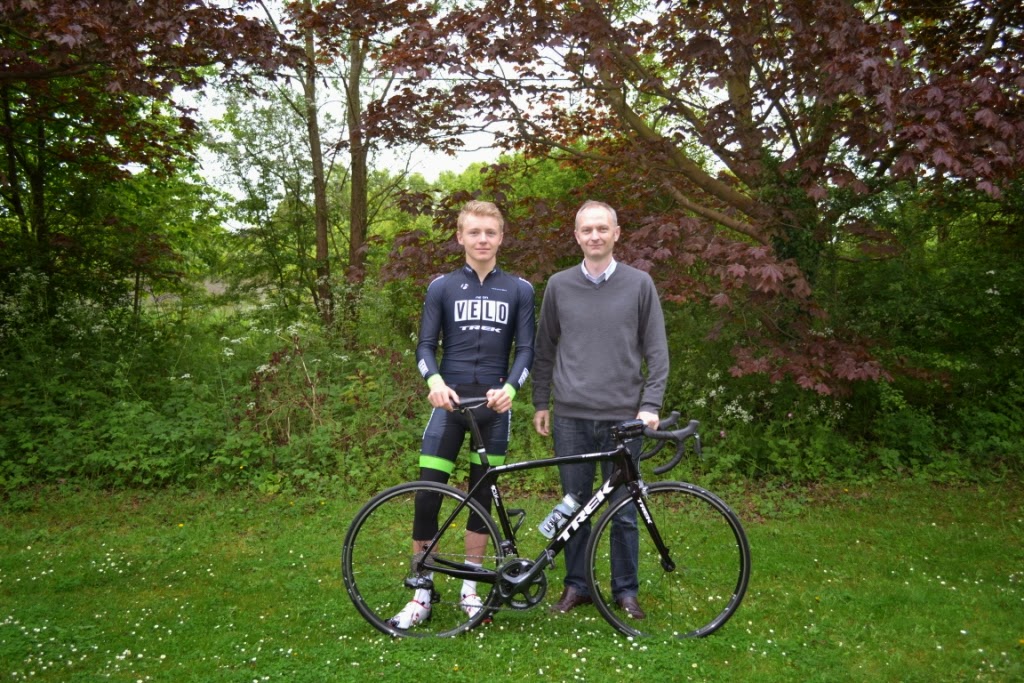
Mark Walker is course manager for the new Foundation degree in Cycling Performance* at Writtle College. A senior lecturer in sports and exercise performance at the College for the last seven years, he provides coaching support to some of the top GB cyclo cross riders, including European Cyclo-Cross Champion Helen Wyman, emerging star 17-year-old Sean Dunlea - who is a student at the College - and multiple national champion Hugo Robinson. Here he explains why now is the right time to launch a cycling degree, what the course involves and its unique mode of delivery, which gives students the chance to pursue their coaching or competing ambitions while studying.

Mark Walker (right) with cyclist Sean Dunlea
"The idea for this new degree came from the fact that I've been undertaking physiological tests on a number of cyclists in the sports laboratory at Writtle College who have faced the dilemma of whether to continue in education when they leave school or try to become a professional cyclist or coach. This is clearly a really difficult decision and it creates lots of conflicts in their lives. Some of them choose not to pursue their education and to dedicate their time to being a pro as it's such a small window of opportunity but it causes stress as they know very few people succeed. It's obviously good to have a fall-back position and their parents, knowing the risks, find it concerning if they give up education altogether. With the growing interest in cycling, we thought we could put together a degree that is taught in a flexible way so those in this position can continue with their studies but also balance their training or racing commitments. 

The course is a Foundation degree as this has a work-based focus and is more vocational than an Honours degree. The students spend 25% of their time in industry. Our model is that students spend September to February in College studying, with intensive teaching in February. They then carry out work experience in the summer months - coaching, cycling development, working in any facet of the cycling industry they are interested in or, if they are a competitive cyclist, they can race and train while it contributes towards their assessed work experience. During this time, there is an element of distance learning to the degree - they continue with their formal modules online - so we're really trying to make it as user-friendly as possible for these students. 

The Foundation degree has modules to complement coaching such as coaching strength and conditioning, exercise physiology, nutrition, along with a large element being about the cycling industry and careers in the industry. We have a fully-equipped sports lab here, which has a strong focus on cycling science - measuring power outputs of cyclists with SRM and 10 power tap wheels - and the physiological demands on the cyclists. 

With the industry-focus of the degree, students can really think about their future career direction and we can facilitate it so they have the career they want. We have a huge number of contacts in the industry - the Olympic velodrome, Hadleigh Farm, Braintree BMX Club, local coaches, physiotherapists and the professional cycling team - which can help students gain the work experience they need. The professional cycling team in particular can give students a unique and valuable insight into the roles of staff and what it's like for riders on the team. 

It is an exciting time in the industry. When I was a youngster there wasn't an obvious way into cycling. But with British Cycling there is now a clear structure and route into coaching. We are offering a coaching qualification as part of the degree so we can give students the best chance of being able to step into a career after successfully graduating. We envisage our students embarking on carers in cycling development, coaching, team management, retail - the biomechanical side of the market is really growing - and competitive cycling. Although the degree is based purely on cycling, students will also be able to progress onto the more generic Sports and Exercise Performance Honours degree at Writtle College - the Foundation degree in Cycling Performance will count as the first two years so all they need to do is to study for another year to get a more general sports science BSc. This opens up doors in sport generally and they could go onto physiotherapy qualifications or teaching qualifications, for example. This means, on graduation, they can boast a Sports Science degree with a unique focus on cycling, which should put them in a strong position. 

We carried out market research on Twitter to gauge demand for the degree. Within two days we had 200 respondents to our online survey, so this gives an idea of the level of interest in the programme. As a result of this feedback, we have broadened the scope of the degree. At first we thought the degree would mainly appeal to those who have just completed school or National Diplomas but we found there was a demand from older students who were saying that they wanted a career change in their late 30s or 40s and they were interested in pursuing a cycling course. These were people who could already have a qualification from British Cycling but wanted to learn the underpinning sports science. There is a parallel to what I did - I trained in engineering, bio-technology, as an undergraduate and then did my Masters in my early 30s and pursued a career in sports science and as a cycling physiologist. That came from a passion in cycling and sports science as a youngster so I can empathise!

Cycling is thriving off the back of the Olympics and the Tour de France, with the success of Bradley Wiggins and Chris Froome. The Women's Tour has gained a raised profile through the success of competitors such as Marianne Vos and the UK held the European Cyclo Cross championships in 2012. Alongside this, there's been a big push by the Department for Transport for active transport for good health and environmental reasons. All of this has led to an enormous growth in the popularity of the sport and many more people are racing recreationally. The College is already really well-known in the cycling community as we have hosted cycling events here such as the Eastern Region Cyclo Cross Race and rounds of the Mud, Sweat and Gears mountain biking contest. We have held, with British Cycling, coaching days for women's cyclo cross and an eastern region cyclo cross conference, all with the help of Mark Wyer from British Cycling. This momentum is continuing with the Tour de France visiting the UK this year and coming past Writtle College. With the London velodrome only 40 minutes away from us, along with Hadleigh Farm in the county, Writtle can capitalise on being in the midst of this action and we hope to develop the College as a hub for cycling expertise. All this makes it the right time to launch a programme like this and I am really excited to be bringing it to Writtle College."

Take a look at the course here: http://writtle.ac.uk/Foundation-Degree-(FdSc)-Cycling-Performance

*subject to validation

Thursday, 23 January 2014

Some like it hot - by Senior Lecturer Simon Hart

Simon Hart, Senior Lecturer in the School of Sustainable Environments, discusses the ornamental value of the Chilli pepper.

-----------------------------------------------------------------------------------------------------------------

Fresh chilli peppers (or chile if you prefer) are far more available than they have ever been as they are now being grown on a commercial scale in the UK.

Chilli peppers belong to the genus Capsicum, most falling into the species C. annuum, though some of the hotter types (eg. the scotch bonnets) are a different species,  C.chinensis.  Greenhouse trials carried out at Writtle College on behalf of Tozer seeds during summer 2013 featured over sixty different varieties, and this is by no means an exhaustive collection.

Growers have found that chillis do very well as a summer crop in greenhouses or polythene tunnels, they  give a reliable yield (the flowers are self pollinating) and providing  aphids are kept under control aren’t too troublesome in the way of maintenance.

Although famous for their variability in heat content, which goes from mildly warming to lethally hot, chill peppers also vary widely in size, shape and colour. As UK production becomes more widespread and availability increases more of the interesting colours and shapes are finding their way onto the market as fresh produce.

The ornamental value of fresh chilli peppers has been explored recently by BA Floristry students at Writtle College, who have been designing a range of chilli pepper based arrangements such as the example below.

The peppers themselves have been proving surprisingly versatile due to the wide variety of shapes, sizes and colours available.

Fruits are generally glossy, work well with similarly glossy foliage as background, but also bring an exciting variety of colour, shape and form to the design.


Below are a few of the different types the students have found work well in arrangements:


Scotch Bonnet type peppers are usually available in red, yellow and orange shades when ripe, though more unusually a deep glossy chocolate brown. Chefs use gloves when preparing these peppers as they are lethally hot, so take care when handling

Left - an unusual chocolate brown Scotch bonnet or Habanero type


Yellow fruited Cayenne type (right)

The red Cayenne peppers are fairly common, but the yellow fruited less so, this variety is small enough to grow as a pot plant and produces the peppers in clusters


Another Habanero type– the variety Hot Paper Lantern (left)

Hot like the scotch bonnets, but a more elongated fruit shape.  This variety looks quite dramatic if used as a length of stem with attached fruit.

Known for its high yield, the fruits are closer spaced along the stem than many other types. 


The unusual Cambuli (right) – highly decorative colour and shape, also note the particularly long stem on each fruit.


‘Vampire’ (left) – a chill bred in the UK by Tozers;  purple stems and foliage, purple fruit ripening to red, also unusual purple flowers.