Wednesday, 13 January 2016

How to best prepare for your future career!

Mark Yates (left), Careers Coordinator
Now that half of the academic year has passed, it’s a good time to reflect on what you are learning, how this will help with your future career, and what will make you stand out from the crowd.  There are several things to take into consideration...

How could you use your knowledge and skills relating to your course?
You will have picked up a lot of knowledge and skills on your course that you may want to use in a future career. If you haven’t started already, it’s probably a good time to start building links with possible employers that you might consider working for in the future. Find out about any work experience or internships that will be available in the coming summer, and ensure you swap contact details.
It’s not just about knowing facts and figures, but about your transferable skills and motivation too!
Employers tend to recruit staff that are motivated and keen to learn. They are also looking out for key transferable skills; communication, team work, problem solving and showing initiative, alongside some commercial awareness – how can your current studies and experience demonstrate these? If you need help with identifying what skills you have, ask!
Do you want to use your course in a related career?
Having now had some experience of studying the course, do you want to use it to find a directly related career? Or is it just a stepping stone to go in a different direction? If you want to talk this through, you can make an appointment with the careers department who will be happy to help: careers@writtle.ac.uk
Are you planning on studying another course after your current course?
Have you enjoyed studying? Are there parts of the course that you would like to develop more in-depth knowledge about? After your current studies there are several progression options for you to consider. You could look at another college course, a degree course or even postgraduate study!  All the skills and knowledge you have gained will help you in the next level of study.
What work experience or commercial awareness have you developed?
Regardless of the qualification you are studying, employers really like to see that you’ve got some relevant work experience – so now would be a great time to start looking for a work placement for the summer break. It will be a good chance to put into practise what you’ve learnt at College, and also give you something else that employers really value – commercial awareness. What’s commercial awareness? It’s about understanding how businesses work, and how your role in the organisation will help it run as best as possible.  By gaining some experience you can also start to build up your awareness of labour market information, i.e. what opportunities are out there that you might be interested in, and how to access them!
Next steps…..
After some thinking about your course and how you might want to use it in the future, now comes the ‘planning’ part, regardless of whether you have a definite goal in mind or not. Make sure your CV and social media profiles are up to date and professional looking. If you would like support and guidance in writing a CV, developing your social media profiles or you would like to discuss work experience options and/or further study options, please email the Careers department on careers@writtle.ac.uk. It’s never too early to start planning, and never too late to actually do something about your future – it’s just a case of developing the ‘career planning’ skills to make the most of your opportunities. 
 
Written by Mark Yates


Tuesday, 8 December 2015

From Norway to Writtle - an international student experience!

Two Norwegian students, Anne-Marthe and Serine, have been keeping a blog of their student experience since arriving at Writtle. Here, they capture their own journey of how they chose Writtle College and settled into life in England!


From Norway to Writtle!

"Hi, my name is Anne-Marthe Brautaset and I am 23-years-old. I am from a small town in Norway which is known for their fish export called Ålesund. Before I came to Writtle I studied Interior Design and have a degree as an Interior consultant, after that I had to get higher education entrance qualifications to be able to apply for a university. I had two gap years after becoming an interior consultant and went travelling a bit to experience the world before I decided what to study at Uni. I was unsure about what I wanted to study, I decided quite fast that I did not want to work with interior. 

Since I was a little girl animals have been a really big passion of mine, and therefore my choice became easy. I have owned several cats and a dog, horse and guinea pig, as well as working in a pet shop for 6 years. I am a very curious and adventurous person by nature and wanted to study abroad, my choices were many and suddenly it was hard to choose. But as I started to read about the course Animal Science I found out this is something for me. In Norway we don`t have the same course, and the animal courses are very limited. Since I was quite sure that I don`t want to study to become a veterinarian I still have the opportunity later in life by studying Animal Science if I change my mind.

Once I made my decision and all the papers was ready to forward to my contact person through Across the Pond, which is a Norwegian agency helping people to study abroad. I applied for a few other universities as well and got accepted to three of them. Then it suddenly became hard, I had to do some research to find out which of the universities that would fit my purpose best. So my choices were between a really nice university next to a beautiful beach, but did not have much practical work in the Animal Science course, as well as being far away from London which then made it harder for me to get back home to Norway during holidays. And then it was Writtle, beautiful campus with a lot of opportunities to get practical work, very close to London and was an Agriculture university. I made my choice to become a student at Writtle College. 

I was lucky enough to have parents that wanted to support me as much as they could and wanted to follow me at my first time at Writtle College. I was so excited, I had never seen the campus before or the area close by. I did not have the opportunity to go to a open day at Writtle and therefore everything was new and exciting as well as scary. I did not know anyone else that was studying at the college or the same course as me. I chose to stay in a hotel with my parents the first days so I could see my room and then plan what I needed to buy.

The first day
This day was the introduction day where you could pick up your keys and sign up for the Writtle surgery and buy a wrist band for freshers' week. When I arrived to pick up my key there was a really polite and smiling girl that asked if I wanted a tour around campus, I could of course not decline to that kind offer and she showed me around the grounds and Strutt - the building that I was going to live in the first year. A few minutes later we found out that this girl was Norwegian, and suddenly I felt a bit more home. She was taking care of me the first few days at freshers' week and helped me make some relations.

The induction of the course
Thursday of freshers' week we had our induction of the course, I was all alone and did not know anyone yet that was going to be in my course. I am not a shy person so it was not a very big problem, but when you are alone in a big crowd you will become a bit unsure whether you are shy or not. I had my notebook ready to make notes, I was excited of how this year would be. This was going to be my home for the next three years, without any known people and close relations nearby. Therefore, it was really important to make relations as fast as I could. But suddenly between all the talking of the crowd waiting for our lecturers to show up, I could recognise a familiar sound. Two people talking, and they were both Norwegian. I turned around and asked; “are you guys Norwegians as well?” they both were very polite and started talking to me, they came down and sat next to me. I did not know that one of those two was going to be my closest and dearest friend by now."


"Hi, my name is Serine Hansen and I'm from the island Nøtterøy, that is outside Norway's oldest city Tønsberg. In Norway I studied the higher education entrance qualification with science (studiekompetanse med realfag) before coming to Writtle. I have always loved animals and known it’s what I want to work with. And for a while I was set on going to vet school, but the more I learned about the animal business world, the less sure I was that vet school was the right decision for me. During my exchange year as a student in California and lived with a family where the mom was a vet. They had 17 animals, cats, dogs, birds, rabbits, fish and a rat. I learned so much during this year and from the family and also from volunteering at a local animal shelter. After this year I started looking more in to vet school mostly in eastern Europe, but one day an agency called Across the Pond came to the school. They were promoting different schools in England and talked about Writtle and the Animal Science course. This course sounded like something I would like to do, so I read up on it and found out that if I changed my mind and wanted to go to vet school, I could use the course towards it. So I was sold. This was the perfect course for me.

I contacted Across the Pond and they helped with all the applications and letters that I needed to do for the apply to schools in England. I was pretty set on going to Writtle College, but I also looked into other schools. In the end I ended up with Writtle. They could offer me more practical work with animals, sports and most important short and easy travelling between Writtle and Nøtterøy. To be sure of my choice, I wanted to go on one of the open days, but they were a bit hard to fit in to my schedule with school in Norway. So I talked to Across the Pond and they helped to set up so I could come a day that fitted with my schedule and be guided around the school. I brought my dad with me and we were guided around school with a man from the international student service and one of the animal science lectures. This was so good to see the school with my own eyes and get to talk to one of the animal lecturers. My dad really liked the school, the beautiful campus, and the area around. So my decision was final and all I had to do was wait for the applications to go through and be accepted to the school.

The first week

I arrived around 8 in the evening on the first day. So I called the warden and got the keys for my room. I met a nice girl in the hallway and she invited me to the common room to come and socialise with the other students that was there. So I did and met some of my new neighbours for the year. The next day I went and got my ID and did some of the information activities that was listed in the introduction guide. In the evening I went to the international 'meet and greet', this was so nice. I got to know other international students and some Norwegians that were in their 2nd year. 

So we then went to the party down at the 'baa' and they introduced me to a lot of people and I got to know some freshers that did the same course as me. The next couple of days I went shopping in town to get what I needed for my room and on Wednesday night we went to town to the club that is sponsoring the school. On Thursday was the introduction day of the course and in the hallway outside I met a 1st year that was Norwegian. We walked in to the lecture hall together and sat down talking. Suddenly a girl turned around and ask if we were also Norwegian. So we sat down with her instead, not knowing this was going to be my closest friend for the years to come."  

Writtle College: http://writtle.ac.uk/international
Open Days: http://writtle.ac.uk/opendays 


Wednesday, 7 October 2015

Writtle Wildlife Watch, October 2015

Image courtesy of Wikipedia
'Seawall' by Liftarn 
I was out and about the other day on the gorgeous Essex coast when I got chatting to two women who were walking round the sea wall. The walls are one of the joys of the Essex coastline, providing the walker with a panoramic view of both the sea and the land, with the former desperate to breach the defence and take back the territory we have stolen from it; the latter cheekily thumbing its nose from behind the safety of the wall.
 
The women were going the long route around the wall and were kitted out with boots, fleeces and binoculars, so clearly they had an interest in the natural world. There was much to see. With the tide half out, waders had been gathering in large numbers and a flock of over 200 Golden Plovers was passing overhead as we chatted. I had already seen Harriers over distant Northey Island and had been chuffed to bits to find a Pompilid wasp dragging its prey, a Woodlouse Spider, across the path. 

Moth tent
We remarked on the huge number of moth ‘tents’ we could see in the surrounding scrub and I said it was good to see so many this year, there having been far fewer in recent years. These tents protect the larvae while they grow and can be quite surprisingly robust. One of the women said there were far too many moth tents and she hoped they did not kill off the trees. 
 
In other words, ‘trees good, moths bad’. This got me thinking. 
 
Firstly, what do we regard as ‘wildlife’? 
 
There appears to be a hierarchy in the way we regard our wildlife and this is often reinforced with spectacular ignorance by the British press. The famous biologist E. O. Wilson advanced the notion of ‘biophilia’ but perhaps we are instead in the grip of ‘biophobia’. Mammals, birds and trees: good. Amphibians, dragonflies and fungi: so so. Wasps, snakes and thistles: bad. Sadly, the consequence is that often only the first group actually count as ‘wildlife’ as the others are too horrible to contemplate. Why is this? Are we conditioned at an early age to appreciate the cute, fluffy and accessible and to despise the challenging, awkward and stingy? If so, we have problems, as ecosystems rely on far more than the cute and fluffy to make them work. Where would we be without the pollinators (including wasps and flies) and the detritivores (slugs and slime moulds)? We would have no food and we would be up to our knees in waste, that’s where! 
 
Secondly, why are the British obsessed with trees? 
 
I suspect this is partly to do with what we regard as ‘nature’ and partly as a result of confusion around general green issues such as climate change, global temperature regulation and sustainable timber harvesting. More trees must be good, because we keep telling ourselves it is the case. 
 
People sometimes say to me ‘Well, France and Germany have far more trees than we do’. But it’s not a competition. And even if we could, do we really want to cover our wonderful heathlands, fens and grasslands in trees? Of course not. 
 
Thirdly, what’s wrong with a dead tree? 
 
My co-chattees (as Alan Partridge may have described them) were concerned that the trees might be killed by the presence of the moths. I do not want to seem mean but my first thought was ‘so what?’, although I promise I did not actually say it out loud. 
 
The fact is, we are now beginning to realise that dead wood has a key role to play in the way ecosystems work and we need a lot more of it. Conservationists now wince at our collective reaction to the storm of 1987 after which everyone rushed to tidy up the countryside and remove all that lovely dead wood. A handy publication is the Forestry Commission’s ‘Life in the Deadwood’ which I urge you to find online. A dead tree is a good tree! 
 
And on that happy note, until next time…
 
 
Written by Alan Roscoe

Wednesday, 23 September 2015

RDA National Championships!

Hi there! My name is Kyrby Brown and I am a 2nd year student studying Equine Studies and Business Management at Writtle College. I am also a competitive grade 1b para-dressage rider with the disability Arthrogryposis, which affects the movements of muscles and joints in all four limbs.
  
Kyrby Brown and Pip
I started riding at the age of three for therapy, but as I grew older I realised that I wanted to take this further and make it more than just a hobby. I have never owned my own horse, however over the last few years I have been fortunate enough to have access to some fantastic horses who have all taught me so much. My partner for this year, Pip (a 16.1hh, 19 year old Portugues), is one such horse.  
 
This year I was fortunate enough to qualify for the RDA National Championships, which are held every year in Hartpury, Gloucestershire. The Championships bring together hundreds of riders from all over the United Kingdom who compete in a range of disciplines including Dressage, Carriage Driving, Vaulting and Countryside Challenge.
 
In order to qualify riders must first take part in a Regional Qualifier and score in the top 2 with scores over 60%. I took part in this qualifier in 2014 but unfortunately did not qualify. However, this year I was determined to do so, I made it my goal to get to the National Championships in 2015. Pip and I came through with a personal best of 69% and first place at the regionals! I was ecstatic as this was my main goal for the year, to train and compete at Nationals.   
 
The National Championships are a huge event; each competitor is graded according to the severity of their disability and how they are affected. The grades are 1a, 1b,II, III and IV. There are also visually and intellectually impaired classes. The higher the grade, the more able (more movement, stronger, etc.) you are. The gradings mean that competitors compete as equals and makes the competition fair. Due to being affected in all four limbs I am classified as a grade 1b.
 
The tests are scored according to the ‘normal’ dressage rules and are ultimately about accuracy, harmony and level of training. The horses are all trained in the same way so they have to learn to adapt to the riders individual aids, special equipment can be used but must be authorised. For example, I use loop reins and toecaps on my stirrups. We all train using the same scales of training as able-bodied riders, I trained very regularly in the run up to the Championships, I also had to arrange and choreograph my freestyle which is ridden to music.
 
I was competing in the grade 1b championships and the 1b freestyle to music. Due to a bit of excitement in the warm up we were not as relaxed as I would like throughout the Championship test, scoring 63% and coming 4th. The freestyle went slightly better as we had had a little more time to 'tune in' and settle down so overall we came 2nd!
 
I was very happy with my results as it was my first year competing and a lot to take in, we have improved a great deal since last year and I hope to come back fighting next year as well! I have so much still to learn but I know, as my understanding grows, my riding improves - as does my results.
 
Above all, Nationals proved to be a fantastic experience for me, this is - in no small part - thanks to the fantastic team of riders, grooms and horses that is Oaklands RDA, who have supported me to achieve my goals this year and continue to do so with each ride.
 
I travelled to the championships alongside my family and groom/all-round-helpful-person Jen (Edwards), who is also on the same course at Writtle. I could not have had better support and cannot thank everyone enough.  I would like to especially thank Sarah Moreland and the brilliant team at Oaklands RDA who made the entire venture possible and Clive Milkins whose coaching has contributed a great deal to my understanding and progress in my riding. 
 
Finally, I would also like to thank my fabulous training partner Pip and his owner Emma Brown. This wonderful, experienced horse has taught me a great deal and continues to teach me each time I ride. 
 
Bring on next year and everything in between!
 
 
Written by Kyrby Brown

Monday, 6 July 2015

Writtle Wildlife Watch, July 2015

Do you ever dread those newspaper articles which begin with the words ‘Research suggests that…?' As someone with a science background, I do take exception to the way the media is happy to cherry-pick research and quote it out of context just to make a headline. 
 
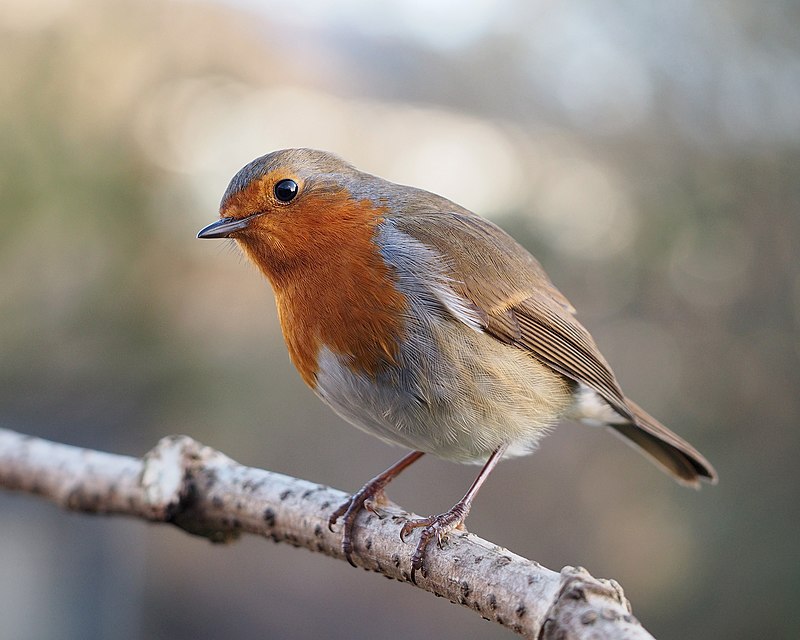
But just recently – and perhaps you saw this on Springwatch – there was a really nice national survey undertaken to establish the identity of ‘Britain’s National Bird’. Clearly this was simply a popularity contest as there were no constitutional, social or political parameters as such, so the winner’s credibility as ‘national bird’ might be challenged!
 
Erithacus rubecula with cocked head.jpg
Image courtesy of Wikipedia
'European Robin' by Francis C. Franklin
It was however, a nice exercise and the winner was….cut to faces of various candidates in TV cookery show style…..the Robin. No surprise there, but some others were very interesting choices. What caught my attention was that there were no fewer than three birds of prey (Barn Owl, Red Kite, Hen Harrier) which seems rather contrary to the message I sometimes hear about how concerned we all are (allegedly) about the impact of these birds on populations of songbirds. That argument is, of course, unbelievably weak as firstly, raptors are generally at the top of food chains and if populations of prey species decline, then so do the predators. And secondly, not all raptors predate other birds.
 
So today I am launching a new survey to find Britain’s Most Important Bird. And, as if by magic, I am delighted to announce the results are already in! In reverse order and with reasons for their importance, the top five are: 
 
5) Turtle Dove 
A bird which has declined by a staggering 88% between 1995 and 2012, most probably as a result of herbicide use in the arable enviromnent and the general intensification of agriculture. Now a real ‘indicator’ species of the health of our farmed environment. Farming accounts for about two thirds of the UK’s land cover.
 
 4) Bee-eater
Guepier d'europe au parc national Ichkeul.jpg
Image courtesy of Wikipedia
'European Bee-eater' by Elogollimoh 
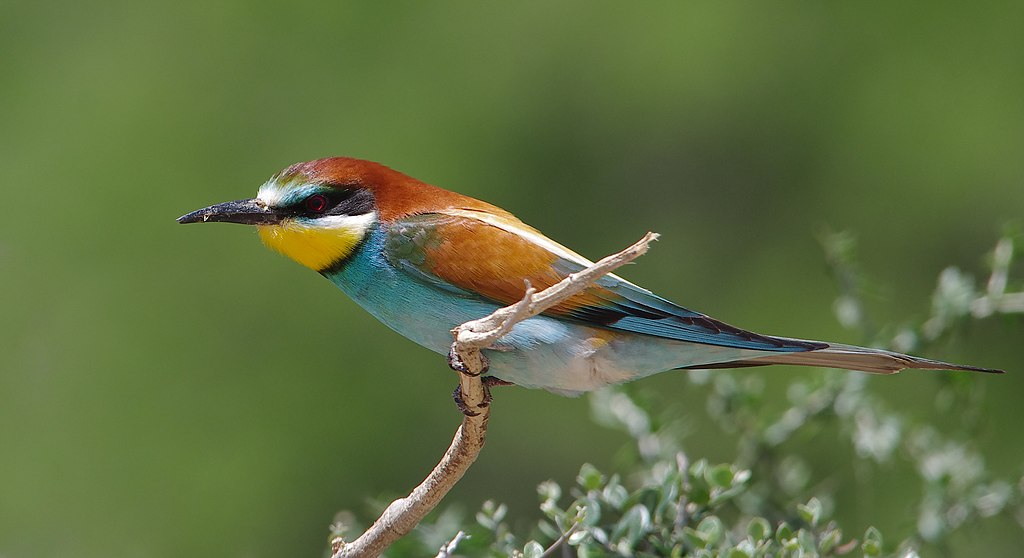
A species which has just started breeding in very small numbers in the UK, perhaps suggesting that our climate is warming to the point where our UK bird list may change irrevocably in the next few years. A real humdinger of a bird with a weird, warbling call. Even more staggering in the flesh than in the photos.
 
3) Hen Harrier
A hugely controversial bird due to its preference for the chicks of Red Grouse. This puts it into conflict with gamekeepers, with a very heated debate about the way we manage our upland areas being the result. And on going and fascinating situation which concerns not only a single species, but is about the future of entire swathes of our countryside….
 
2) House Sparrow 
Martha was the very last Passenger Pigeon. She died alone in Cincinnati Zoo in 1914. The extinction of her species was, at one time, considered an impossibility due to the fact they once numbered in their billions. Yet they are gone and unless we keep an eye open for all species, we risk losing them. The House Sparrow, once almost ubiquitous, has declined by 71% since 1977. Might it go the same way?
 
1) Nightjar
Şivanxapînok.jpg
Image courtesy of Wikipedia
'European Nightjar' by Dûrzan cîrano
The final choice is a little off-the-wall, a bit like the bird itself. Yes, they are rare but that is not why the judging panel (me) chose it. It is because it is a bird which is full of mystery, not least due to the fact that it is only active at night. Legend had it that the bird stole milk from goats (hence the scientific name of the genus, Caprimulgus, or ‘goat-sucker’!) but the charm of hearing their churring call and watching their distant silhouettes on a warm summer’s evening is an experience never to be forgotten. The Nightjar represents something we are at risk of losing – a sense of wonder at the natural world.
 
 
Written by Alan Roscoe

Tuesday, 16 June 2015

Writtle Wildlife Watch, June 2015

One of the joys of being a lecturer on the Conservation scheme here at Writtle is that you get to visit some wonderful places. And this year we took our first and second year students away for a week to the glorious area of the south coast, the New Forest. 
 
Maiden Castle, Dorchester
During what the Two Ronnies might have called ‘a packed programme’, (goodness, that makes me feel positively antediluvian!) we went all over Hampshire, Dorset and Wiltshire, visiting some great sites and talking to people working in a huge variety of Conservation jobs. 
 
For me though, the mini-highlight was on the Thursday when we stopped off to have a look at Maiden Castle, a magnificent Iron Age hillfort just south of Dorchester. Always impressive and giving beautiful views over the surrounding countryside, it is a particularly good spot for finding various birds such as Linnet, Skylark and Corn Bunting. And I thought that was all we were going to find but on the way down, student Jimmy suddenly stopped and said ‘Alan, what’s this funny beetle?’. 
 
Oil Beetle at Maiden Castle
Now, many species of insect are special but then there are others which really have the ‘wow’ factor. And Jimmy had found one of the latter – an Oil Beetle. 
 
Oil Beetles are peculiar and charming in equal measure. They are rather odd to look at, with an elongated body and narrow head, but have an exquisitely glossy sheen of black, violet and blue. They are totally reliant on solitary bees for the completion of their lifecycle, with the beetle larvae climbing flower-stems and waiting in flowers in order to hitch a ride on a passing bee. Back in the bee’s nest the larvae of the beetle feeds on its eggs, as well as the stores of nectar and pollen before emerging as an adult. 
 
We have lost three of our species in recent years and now only five are left. They favour flower-rich grasslands of the type found at Maiden Castle but sadly, we have lost many of these sites in recent decades, making an encounter with an Oil Beetle even more special.
 
Yes, we did see a Corn Bunting as we left but somehow it wasn’t the best wildlife sighting that day.
 
 
Written by Alan Roscoe

Monday, 15 June 2015

What it's like being a Horticultural student at Writtle...

Samuel Moore tells us what first interested him in Horticulture, and how he pursued his passion for plants by studying Horticulture at Writtle College. During his time at the College, Samuel, along with his classmates, has achieved many prestigious awards including 'Best in Show' at the Ideal Home Show earlier this year. But you'll see from Samuel's blog below, their success didn't end there! 
 
The only way in which my horticultural education experience can be best be described is 'magical'.
I first became interested in learning about plants and gardens when I was around about 15; this cumulated in myself studying an ICS Diploma in Garden Planning and Development and this allowed me to progress into studying at Writtle College.
I was offered a place on the Level 1 in Horticulture, but just a few days into the course the experienced and supportive staff at Writtle felt that I was capable to undertake my studies at level 2.  I learnt many practical skills and the theory behind their practise which enabled me to progress on to the level 3 Extended Diploma in Horticulture.
Samuel (right) and classmates at the Ideal Home Show
My time at Writtle College has enabled me to take advantage of a some fantastic experiences that all of the horticultural departments have made possible.  From designing and building a show garden at the prestigious Ideal Home Exhibition, to representing Writtle at the National Final IOH 'Young Horticulturalist of the Year'.   
Entering ‘Young Horticulturalist of The Year’ has left me feeling proud of my efforts and it has capped off a great academic year after achieving Gold, ‘Best in Show’ and ‘People’s Choice Award’ with the rest of my classmates for our show garden ‘Beyond the Wood’ at the Ideal Home Show.
I entered the IOH competition last minute and I would never had imagined reaching the final. The heat at Writtle was tense with two tie-breaks needed to separate a winner… something that was unheard of!
The regional final was nerve racking but good experience. The competition included plant and 'pest and disease' identification and buzzer rounds, along with directed questions. I managed to win the regional final which I never would of expected! 
The national final was exactly the same format as the regional final, and it was held at Barrington Court in Somerset. Again, I was nervous and the competition was of a very high calibre. The other competitors were very knowledgeable and my nerves left me too slow on the buzzer, which proved to me finishing 7th in the competition.
Ben Wincott (right) and students
I would recommend studying horticulture at Writtle College to anyone, as every aspect of the course is amazing. The opportunities and knowledge I have had access to has given me the confidence to continue my studies at Writtle on the Bsc (Hons) in Landscape and Garden Design.
Without Writtle, I wouldn’t have experienced the wonderful world of horticulture and the range of opportunities that are available through it. I particularly feel that the lecturers are of a high quality and that they put their students first, particularly Ben Wincott who absolutely inspires me with his knowledge and his attitude towards education, horticulture and his students.
 
Written by Samuel Moore