Thursday, 19 May 2016

Job interviews vs college & university interviews – the same or radically different?

Image courtesy of Wikipedia
'Handshake' by Hermandad
Having an interview for a job or college/university course can seem a daunting prospect.  And why wouldn’t it? The reason you will have applied for the job or course is because you want the opportunity to do something new to develop your learning and training, and to develop your experience of the world of work - all these combined with gaining related industry qualifications whilst being paid.
 
Unless you’ve had several interviews already, or you are very confident, the prospect of an interview which could influence the next few years of your life can be a scary thought. This blog is aimed at explaining the different types of interviews and to give you some practical tips on how to ‘survive and thrive’ in an interview situation.
 
So, you have been asked for an interview, which is excellent news! And that means you’ve already got an asset that the employer or college/university likes the look of. This is likely to be a combination of work experience, qualifications, skills and motivation. Hopefully recognising this will start to build your confidence and allow you to present yourself well at interview. There are different types of interview which you potentially face. The first two are usually only used by employers rather than colleges/universities, and if you are successful will be followed by an assessment centre or face to face interview.
 
Many job opportunities come after graduation
 
  • Phone interviews – the answers you give will be used to filter whether you get onto the next stage of recruitment or not.
  • Video interviews – these can be either live or recorded. The live ones will have an interviewer asking the questions and interacting with you. The recorded ones will have a set of questions which you will respond to with a set amount of time. The use of video interviews is increasing.
  • Group interviews – these are mostly used to see how potential employees or students interact together. They will be looking for candidates who can interact well, without dominating or who do not really get involved.  
  • Face to face interviews – these will happen in all recruitment processes one way or another. You may have several of these with different members of staff and you may be interviewed by one, two or three members of staff at the same time. 

File:Job interview 0001.jpg
Image courtesy of Wikipedia
'College interview' by B.P.Susf
The aim of these interviews is to help decide whether you would be a good ‘fit’ for the job or course. The main differences between an interview for a job vacancy and a course are that usually there will be several more spaces available on a course.
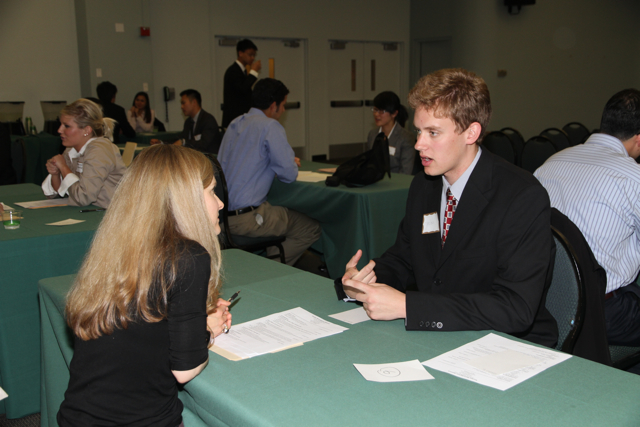
 
So what can you do to make the most of the interviews?


Firstly, you need to remember that interviews are actually a two way process. Not only is it a chance for others to see if you are what they are looking for, but it is also a chance for you to do the same! You need to show that you are a good match, with examples of your skills, motivation and experience, and how you would be a valuable addition to the team/course.  How to do this?  Follow the 3 P’s…Prepare, Plan and Practice!
 
Careers Coordinator helps student
  • Prepare – find out as much as possible about the job vacancy and company, course and university. This will help you to show how you ‘it the job description or course requirements. What examples can you think of to meet the requirements? 
  • Plan – your journey for the interview, what answers you might give, questions you can ask and what to do if something unexpected happens. Is there anything you feel less confident about the interview or assessment centre process? 
  • Practice – can someone give you a mock interview? If you are having to do a presentation, practice it in front of friends, family or careers staff. If you are having a phone or video interview, check that the technology works and the environment is quiet with no visual distractions.
 
 
And lastly, however the interview goes, reflect on how you found it. How would you do it differently next time? And just as importantly, ask for feedback from the interviewers. They should be willing to offer you some.
 
 
Good luck!
 
Written by Mark Yates


Thursday, 7 April 2016

Our two Norwegian student bloggers give their perspective on their course - BSc (Hons) Animal Science!

Last time we discussed which student events to attend, now we will tell you a bit about what we are doing on a daily basis. As we have mentioned earlier we study Animal Science. There are many doors that are open in the animal industry after getting a degree in Animal Science and we both have different aspirations on what we will use our degree for.
Gerbil in the Titchmarsh Centre

In the first year of the course a lot of practical work is done, which will come handy later on in life, especially if you are looking at a career where you will do a lot of hands-on work, like working in a zoo or as a vet. This was one of the reasons we chose to study at Writtle College.


The most exciting module of the first year was Mammalian Anatomy and Physiology and the Comparative Anatomy and Physiology.


When we had lab sessions we had so much fun, we had dissections on every lab practical, which we personally think is when you learn the most. We both thought that we would be disgusted by the dissections as you get to look at some quite nasty stuff, but it is way more exciting than disgusting and makes up for it. If you want to work as a scientist later on in life the lab sessions are very important and would come in handy, also in the veterinarian profession as we study reproductive system, nervous system, digestive system and so on.  
Dissections are fun!


We are both very happy that we chose Writtle College because the academic experience at Writtle is very good! Not to mention our lecturers, they are very knowledgeable and that is something we admire. We think they are easy to talk to and you can have a laugh with them occasionally, which makes the university experience so much better.
 
 
As we study Animal Science and not Animal Management, as you expect we have modules which are science related such as Biochemistry in the first year and Animal Health Science and Reproduction and Genetics in the second year. They can be a bit challenging but they are also a lot of fun and very interesting. Take Reproduction and Genetics as an example, we learn about Mendel and the pea plant which is recap for a lot of people who have done biology before, but when we take that to the next level and start to look at several traits that are inheritable, it becomes very interesting and fun to do. 

We are both looking forward to next year, our last and final year of our degree. It is exciting and scary at the same time, especially thinking about our dissertation. Luckily, we both have found something we want to write about and hopefully we will get our data collected over the summer so that the next year might be a bit easier. 


Thank you for reading and I hope you liked what we had to say!

Bye for now, from Anne-Marthe & Serine

More information on our BSc (Hons) Animal Science and Animal Management courses


Tuesday, 29 March 2016

Shape your future with an apprenticeship!

Writtle College Graduation 2015
Apprenticeships have been around as an option for a very long time! In fact, apprenticeships were first developed in the Middle Ages, as a way of developing skills in particular vocational areas like stone masonry or bakery work, often taking 10 or more years to complete. Nowadays, apprenticeships are available in a much wider range of areas – from Agriculture to Horticulture, and Finance to Health Care. And they will usually take a lot less time to work through than 10 years – most can be achieved within 12 - 18 months whilst some may take 3-4 years, depending on the qualifications being gained. It’s even possible to do a Higher Apprenticeship and get a degree!


So why bother doing an apprenticeship?
Employers are often reported as wanting employees who are motivated, passionate, have the right skills/be willing to develop more skills and have some commercial experience. An apprenticeship will give you the chance to demonstrate motivation, and gain the skills and commercial awareness, whilst also earning money! So whilst some of your friends are still in sixth form, college or university, you could be learning the skills for a specific career – and gaining qualifications from level 2 (GCSE standard) to degree standard. This will mean either going to college one day a week, or doing some study while you are with your employer. What’s there to not like?
 
What are the drawbacks to doing an apprenticeship?
There will always be potential drawbacks to any option. These might include:
·    Combining work and study - you will need to be organised!
·    Fewer hours for social commitments.
·    Having to decide a specific area to get your qualifications in – for instance if you have a general interest in Horticulture you would have to apply for an Horticultural role to do the apprenticeship in. 
·    Focussing on a career area like this for some people would be a bonus, others may need longer to decide.
 
What would you get out of doing an apprenticeship?
As an apprentice you would gain valuable work experience, a qualification (or more often a range of qualifications) a salary, skills and plenty of opportunities to further your career. Once you have finished your apprenticeship you may well be offered a job where you have done the apprenticeship, or you could find a new employer with the qualifications and experience you have gained.
Apprenticeship in Horticulture
Which is better, college or an apprenticeship?
There is no right or wrong answer here! Partly it will depend on what vacancies are available locally to you for both college courses and apprenticeships. Some apprenticeships, like veterinary nursing or farriery can be very hard to find, so applying for a related college course can give you a very good plan B in case you do not get an apprenticeship straight away. Another aspect you may want to consider is how much practical experience you would get with either, to develop the skills for your chosen career. Also you need to think about how you learn best – would you prefer a work environment or a college environment more? Do you need any extra support with your learning – or to redo your English or Maths GCSE? Both these will be available through an apprenticeship and at college.
 
What next?
Mark Yates (left) Careers Coordinator
Now would be a very good time to start looking for an apprenticeship. You can contact employers directly to find out what opportunities there will be with them, and also register with http://www.apprenticeships.gov.uk/ to find out more information and https://www.gov.uk/apply-apprenticeship to register for local apprenticeships. If you want more information about higher apprenticeships where you could do a degree as part of it, you can also use http://www.notgoingtouni.co.uk/?gclid=CNe8j-_skMsCFRBmGwodfAwKhA. It’s worth talking through your plans with your parents/carers and a careers adviser, to ensure you get all the support you need. 
  
Written by Mark Yates
Writtle College Careers Coordinator

Thursday, 24 March 2016

Daffodils in the Writtle College gardens

Easter around the world


The Easter weekend is nearly here! Around the world different cultures, countries and communities celebrate Easter in different ways. Although a lot of our students go home for the Easter break, some of our international and UK students stay on campus. In the UK Easter is seen as the end of winter and the end of Lent, traditionally a time of fasting in the Christian calendar. The Friday before Easter Sunday and the Monday after are bank holidays in the UK and schools close for two weeks.


Easter Eggs


Easter eggs are a very old tradition going back before Christianity. Eggs are a symbol of spring and new life and exchanging and eating Easter eggs is a popular custom in many countries. In the UK before they were replaced by chocolate Easter eggs real eggs were used. The eggs were hard-boiled and dyed in various colours and patterns. The traditionally bright colours represented spring and light.


Hot Cross Buns


Hot cross buns were first baked in England to be served on Good Friday. These small, lightly sweet yeast buns contain raisins or currants and sometimes chopped candied fruit. Before baking, a cross is slashed in the top of the bun. After baking, a confectioners' sugar icing is used to fill the cross. Now hot cross buns are available across the Easter period.


Egg rolling


Egg rolling involves participants launching their specially prepared hard-boiled eggs down a grassy hill. The tradition goes back hundreds of years and survives in towns all over the UK. In some areas it is known as "pace-egging". Customs differ from place to place. The winner's egg may be the one that rolls the farthest or is rolled between two pegs. According to an old Lancashire legend, the broken eggshells should be carefully crushed or they will be stolen and used as boats by witches.


Easter celebrations around the world:


Germany: Germans like to decorate trees with hollowed-out, painted eggs for Easter.


Spain: There are hundreds of processions involving participants dressed in white robes during Holy Week – Semana Santa in Spanish. Religious statues are carried by religious fraternities. Seville puts on one of the most spectacular processions of masked penitents and lavish floats in the world.


Greece: Easter is the most important religious holiday in the Greek Orthodox calendar. Shops line their windows with brightly-coloured wrappings from Easter candles and chocolate eggs. Greek families sit down to a meal of whole roasted lamb or kid goat on Easter Sunday.


Italy: In Rome Holy Week events include a ceremony in which the Pope washes the feet of 12 men at a service commemorating Christ's gesture to his apostles. On Good Friday the Pope takes part in the traditional night-time Stations of the Cross procession at the Colosseum, which symbolises Christ's journey to his crucifixion. Tens of thousands of people will gather in St Peter's Square on Easter Sunday when the Pope will conduct Mass. He also delivers his traditional message of hope and peace, known as the "Urbi et Orbi".


Czech Republic: Easter Monday is marked by an unusual ritual in which boys whip girls around the legs with braided whips. The whipping is supposed to bestow health and youth for the rest of the year and is also seen as a measure of how popular a girl is – the more whips the better.


Colombia: Instead of tucking into chocolate eggs, Colombians like to eat iguana, turtle and the world's largest rodent for their traditional Easter dinner. Colombians travel for hours on intercity buses to spend the holiday with family and prepare special meals, bringing exotic animals from far-flung provinces to their relatives in big cities. Among the unusual seasonal treats are turtle egg omelettes, iguana soup, cayman stew, fried yucca and capybara, the world's biggest rodent.


This is a roundup of just some of the Easter traditions around the world. Wherever you are this spring break have a Happy Easter!


Sources: The Telegraph, The Huffington Post, LEO Network


Thursday, 4 February 2016

Social events not to miss when you study at Writtle College!

In their second blog, our Norwegian students, Serine and Anne-Marthe, tell you the best social events to go to on campus! You can read their first blog here!


Now that you all know a bit about us and our journey towards being students at Writtle College, we will introduce you to the events during the year worth joining.

The Baa Nights

Students on campus
This is our student bar on campus which always has an event every Monday. These are usually themed nights with a huge variation from Army Night, Come as your Course, ABC anything but clothes (cheeky), Halloween Night, Karaoke Night and Movember. This varies from year to year depending on the Students' Union (SU) and the Social Officers who are elected every year.

At The Baa
 

At The Baa


Moulshams 11
Anne-Marthe and Serine
This is the major RAG (raise and give) event of the year. It is a bar crawl with 11 bars included. All the money raised goes to a charity. We start at The Baa and end the whole route with Evoke, where you should wear your dancing shoes because this is one of the largest dancing floors in Chelmsford. The club is only open for Writtle students as this event usually is held on a Monday; many previous students also join in because this is a big event of the year.

Evoke
Evoke nightclub
Evoke nightclub


The three main Balls:
Photo Booth at the Freshers' Ball


Photo booth fun
Anne-Marthe and Serine at the Freshers' Ball
Freshers' Ball is the first one of the year; you could say this is the most influential one. This is where you are new, everything is new and you have the greatest night with friends you have just met. As you all might know this is the end of Freshers' Week where you have had many other different events, so of course the week should end with a big bang! A lot of effort is put into these big events and therefore they are a bit more special than the others. They offer a photo booth and this year the theme of the ball was silver.
Snow Ball
The next big event is the Christmas Ball. As of now you are more than just acquaintances with your friends, you have had a semester together and know each other hopefully very well. This is usually not a themed night. Different from the Fresher`s Ball it usually has a guest DJ who is quite famous. This year we had Radio 1 star Matt Edmondson and Tom Parker (The Wanted) as the supporting act. If you are a person that loves to dance then this is the place for you, a lot of good music and the atmosphere is top notch.
Photo booth at The Snow Ball

Getting ready for the Snow Ball


The last but very best happening of the year is the Summer Ball. Everybody is happy (hopefully) because the year is over and the summer break is closing in. The exam pressure is off our shoulders and it`s time to celebrate what you have achieved during the year. You can feel the warm breeze, and now it`s time to be social with your best friends. You have now became so close and you know your friends' routines in your sleep. This is one of the happenings that usually old students join in, so this easily becomes the major happening. This event provides you with professional photographer, fair and as well as a famous DJ, last year it was Chris Stark. 
Serine and Anne-Marthe ready for The Summer Ball


Thanks for reading, next time we will tell you a bit about the course we are studying.
Serine and Anne-Marthe

Written by Serine and Anne-Marthe, both studying BSc (Hons) Animal Science at Writtle College.

An international student? Study with us!
Writtle College Open Days

Wednesday, 13 January 2016

How to best prepare for your future career!

Mark Yates (left), Careers Coordinator
Now that half of the academic year has passed, it’s a good time to reflect on what you are learning, how this will help with your future career, and what will make you stand out from the crowd.  There are several things to take into consideration...

How could you use your knowledge and skills relating to your course?
You will have picked up a lot of knowledge and skills on your course that you may want to use in a future career. If you haven’t started already, it’s probably a good time to start building links with possible employers that you might consider working for in the future. Find out about any work experience or internships that will be available in the coming summer, and ensure you swap contact details.
It’s not just about knowing facts and figures, but about your transferable skills and motivation too!
Employers tend to recruit staff that are motivated and keen to learn. They are also looking out for key transferable skills; communication, team work, problem solving and showing initiative, alongside some commercial awareness – how can your current studies and experience demonstrate these? If you need help with identifying what skills you have, ask!
Do you want to use your course in a related career?
Having now had some experience of studying the course, do you want to use it to find a directly related career? Or is it just a stepping stone to go in a different direction? If you want to talk this through, you can make an appointment with the careers department who will be happy to help: careers@writtle.ac.uk
Are you planning on studying another course after your current course?
Have you enjoyed studying? Are there parts of the course that you would like to develop more in-depth knowledge about? After your current studies there are several progression options for you to consider. You could look at another college course, a degree course or even postgraduate study!  All the skills and knowledge you have gained will help you in the next level of study.
What work experience or commercial awareness have you developed?
Regardless of the qualification you are studying, employers really like to see that you’ve got some relevant work experience – so now would be a great time to start looking for a work placement for the summer break. It will be a good chance to put into practise what you’ve learnt at College, and also give you something else that employers really value – commercial awareness. What’s commercial awareness? It’s about understanding how businesses work, and how your role in the organisation will help it run as best as possible.  By gaining some experience you can also start to build up your awareness of labour market information, i.e. what opportunities are out there that you might be interested in, and how to access them!
Next steps…..
After some thinking about your course and how you might want to use it in the future, now comes the ‘planning’ part, regardless of whether you have a definite goal in mind or not. Make sure your CV and social media profiles are up to date and professional looking. If you would like support and guidance in writing a CV, developing your social media profiles or you would like to discuss work experience options and/or further study options, please email the Careers department on careers@writtle.ac.uk. It’s never too early to start planning, and never too late to actually do something about your future – it’s just a case of developing the ‘career planning’ skills to make the most of your opportunities. 
 
Written by Mark Yates